Combined Units Used as Home: One Registered Unit Qualifies Both for 1.2% Rate
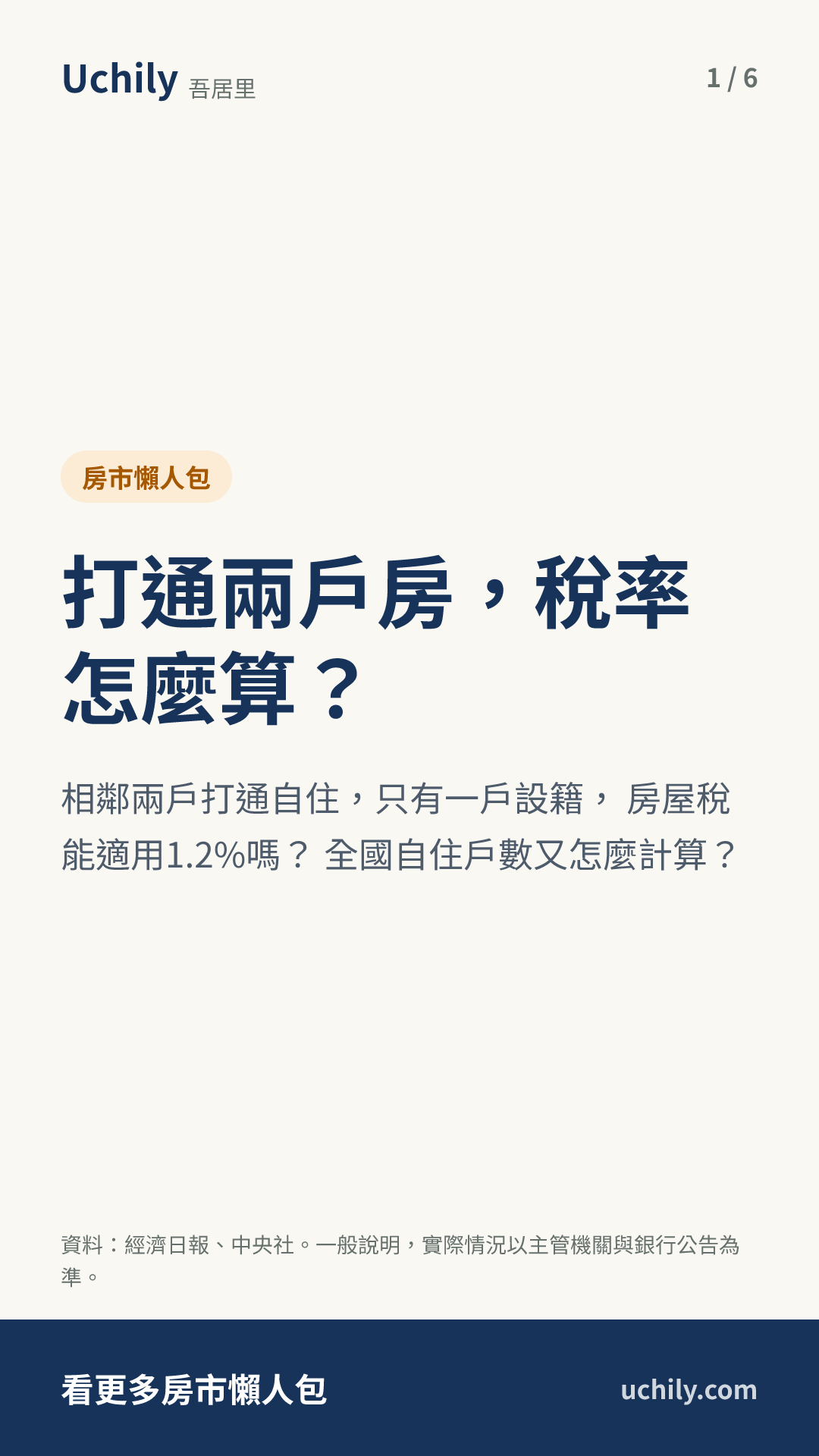
An explanation from the Tainan Taxation Bureau, compiled by Economic Daily News, says that adjoining units combined and used as one's own home can qualify for the owner-occupied tax rate, but the way the nationwide count of owner-occupied units is calculated needs attention.

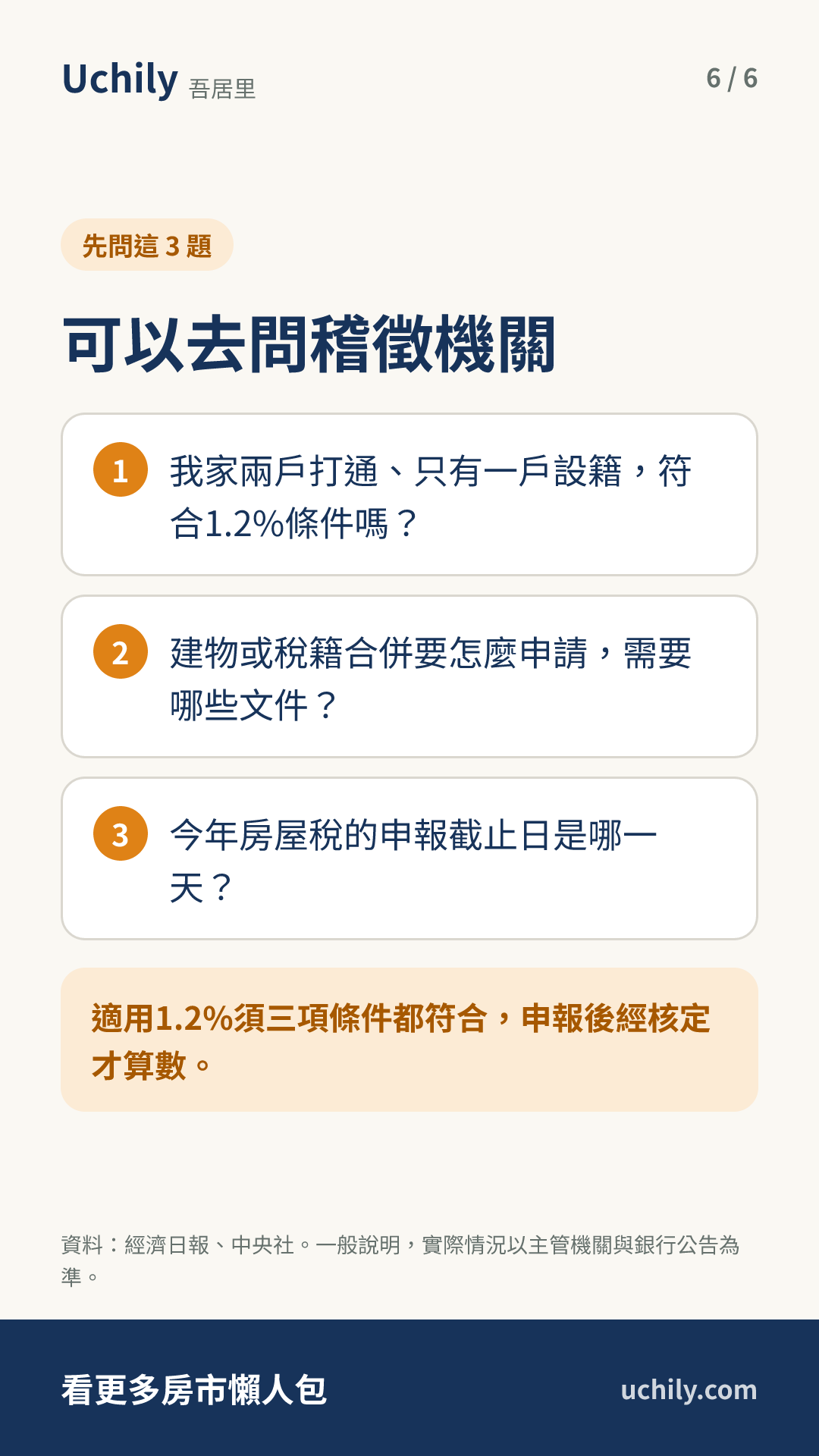
- The Tainan Taxation Bureau said that when two adjoining units are combined for owner-occupied use, both units qualify for the 1.2% rate as long as one unit has household registration and the other conditions are met.
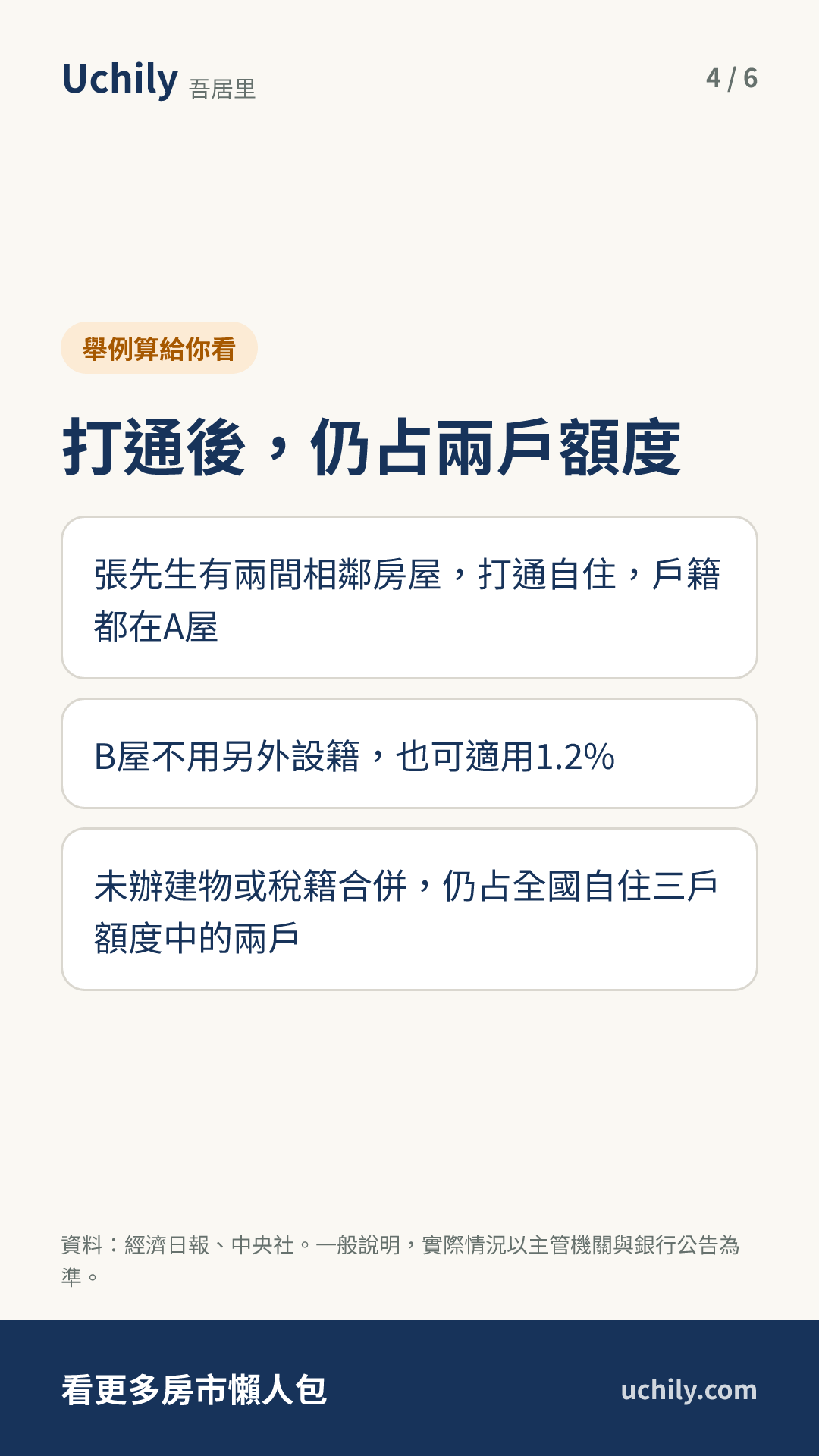
- The Tainan Taxation Bureau noted that where a building or tax record merger has not been completed, the two units are still counted as two units by door number when calculating the nationwide number of owner-occupied units.
- Qualifying for the 1.2% owner-occupied rate requires meeting three conditions: owner-occupied housing nationwide must not exceed three units, and the filing must be made at least 40 days before house tax collection begins.
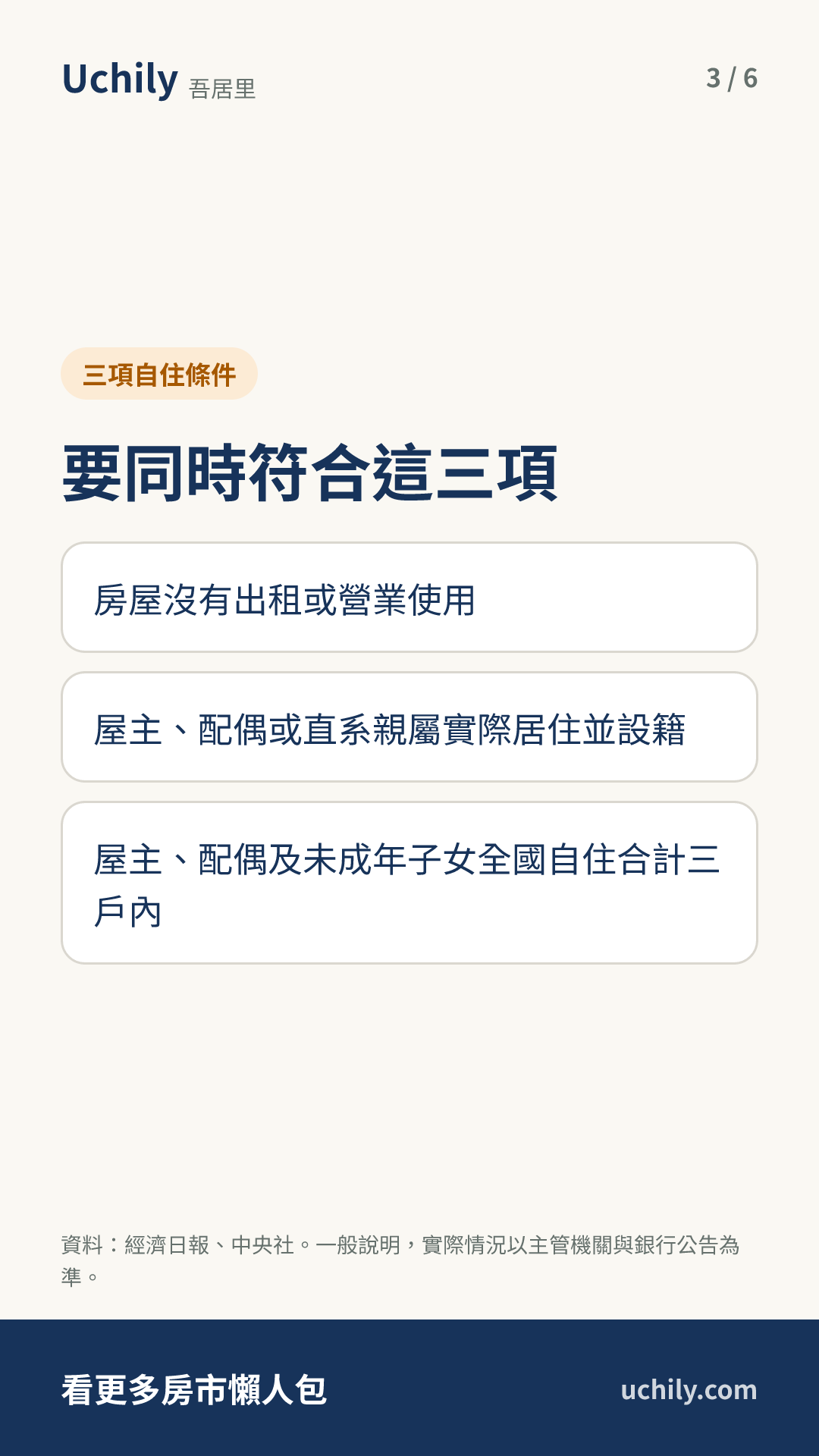
The Tainan Taxation Bureau explained that a property must meet three conditions to qualify for the owner-occupied rate. First, the property is not rented out or used for business. Second, the owner, spouse or direct relatives actually live in it and have completed household registration. Third, the total number of owner-occupied properties held nationwide by the owner, spouse and minor children must not exceed three units.
The Tainan Taxation Bureau gave an example: Mr. Zhang's family owns two adjoining properties nationwide, combined them for use as a home, with no renting or business use, and the whole family's household registration is at Unit A. When he applies for the owner-occupied preferential rate, Unit B does not need separate household registration and also qualifies for the 1.2% rate. However, if he has not applied for and been approved for a building or tax record merger, the two properties still count as two of the three units in the nationwide owner-occupied quota.
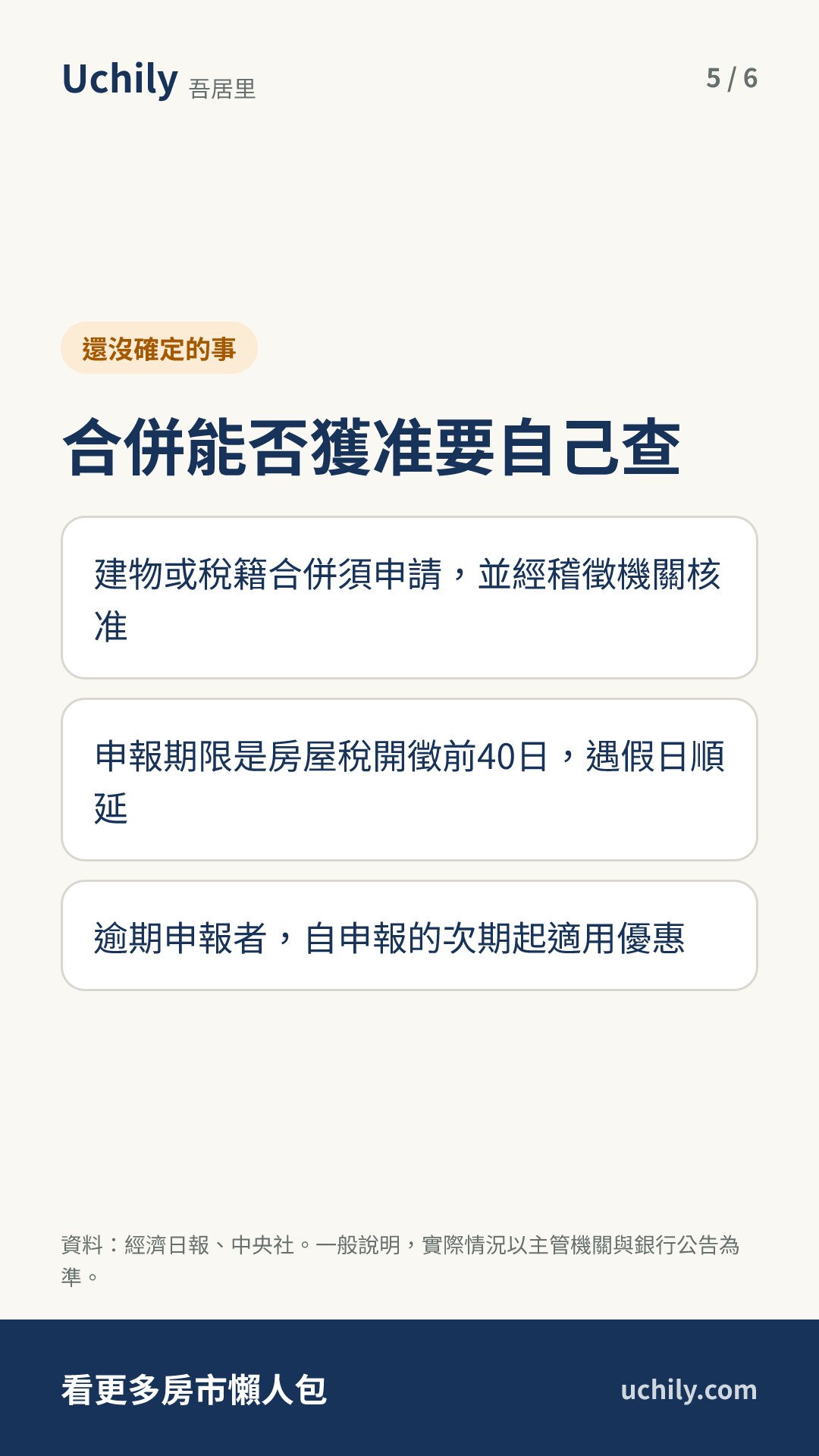
The Tainan Taxation Bureau reminded owners who meet the owner-occupied conditions to file with the local tax collection authority where the property is located at least 40 days before each house tax period begins, with the deadline postponed if it falls on a holiday. Those who file late will receive the preferential rate starting from the next period after filing; once approved, no further filing is needed as long as the usage does not change.
In 2025, the Ministry of Finance issued an interpretive ruling stating that when people combine or jointly use adjoining properties, as long as one unit has household registration and the other owner-occupied requirements are also met, house tax can still be levied at 1.2% rather than the higher non-owner-occupied rate. The Ministry of Finance also ruled that where the person and spouse each separately own two adjoining units and only one of them has household registration, they are still counted as 2 units, making the household's owner-occupied properties 2 units nationwide.
People who have two adjoining units combined for use at home can check whether one of the units has household registration and whether the property is not rented out or used for business. If they want the two units to be counted together in the nationwide owner-occupied unit count, they must separately apply for and be approved for a building or tax record merger. Owners who meet the conditions should remember to file with the tax collection authority at least 40 days before house tax collection begins.
Quick quiz
2 questions; pick an answer to see the explanation
- If two adjoining units are combined for owner-occupied use, only one of them has household registration, and the other owner-occupied conditions are met, which tax rate can both units qualify for?
- Mr. Zhang's two adjoining properties are combined for owner-occupied use, but he has not applied for and been approved for a building or tax record merger. How many units of the nationwide owner-occupied quota of three do the two properties take up?
Image cards
6 cards. Tap to enlarge; save and share with friends

Original:經濟日報 · We only post summaries and key points. Read the original for the full story.
This week’s news, sorted for you
One Uchily newsletter a week, picking out what actually affects your wallet.
Subscribing creates a Uchily account with this email; open the link in the email to finish. You can unsubscribe from any email.