Six Major Cities Issue 81,576 Residential Occupancy Permits in First 9 Months, Down 5.4% Year on Year
Residential occupancy permits issued in the six major cities in January to September 2026 were lower than a year earlier, with only Kaohsiung and Taichung showing growth.

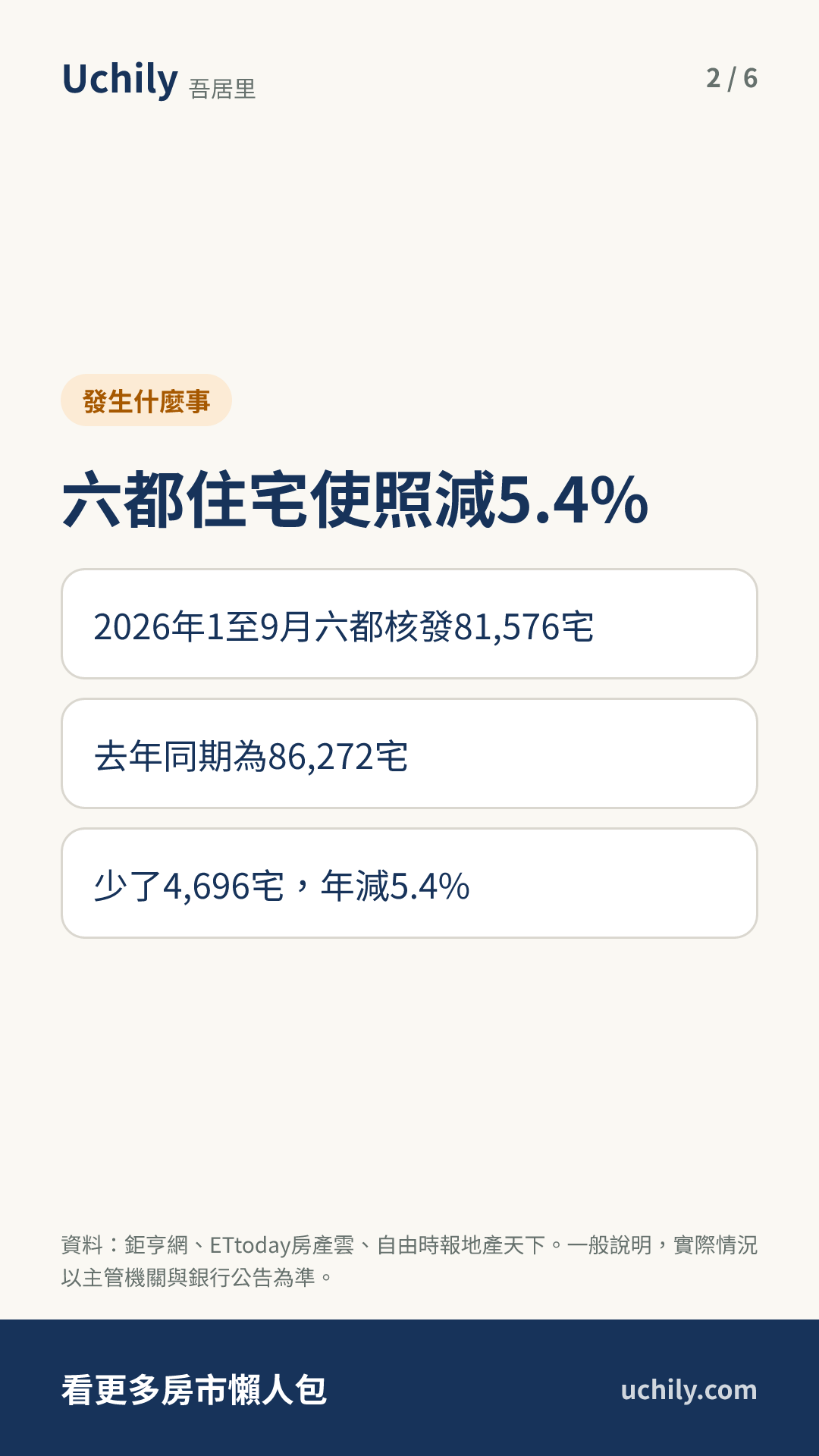
- Construction statistics from the National Land Management Agency, Ministry of the Interior, show the six major cities issued 81,576 residential occupancy permits (units) in January to September 2026, down 5.4% year on year.
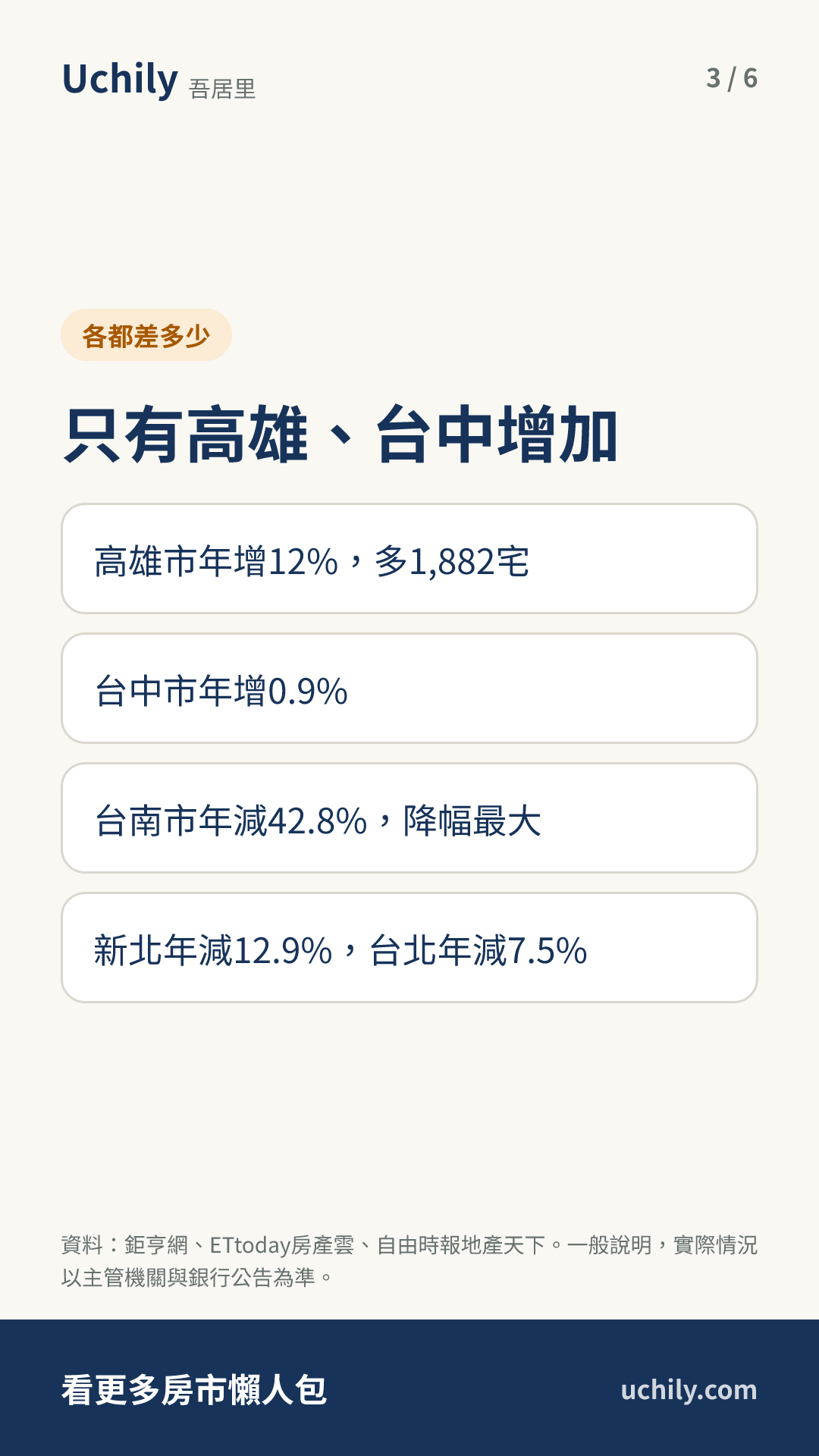
- Kaohsiung rose 12% and Taichung rose 0.9% year on year, while the other four cities declined, with Tainan's 42.8% drop the steepest.
- Lai Cheng-yi, chairman of Xianglin Group, projects that Taiwan's housing market will remain in consolidation in 2027 and 2028.
The six major cities issued a combined 81,576 residential occupancy permits (units) in January to September 2026, compared with 86,272 in the same period last year, a decrease of 4,696 units.
By city, Kaohsiung rose 12% year on year, adding 1,882 units, the largest increase among the six cities; Taichung rose 0.9%. Tainan fell 42.8%, the largest drop among the six cities; New Taipei fell 12.9% and Taipei fell 7.5%.
Lai Cheng-yi, chairman of Xianglin Group, said fewer occupancy permits mean fewer newly completed homes, which helps the absorption of unsold units. He projects that from the fourth quarter of 2026 to the first half of 2027, the structure of the housing market should gradually stabilize.
Lai pointed out that most developers are still buying less land and launching fewer new projects, preferring to sell their unsold inventory first. He also noted that occupancy permit volumes mostly reflect project launches and construction conditions from 3 to 4 years ago.
ETtoday Property Cloud noted that occupancy permits are a lagging indicator and should not be used directly to gauge current buyer demand.
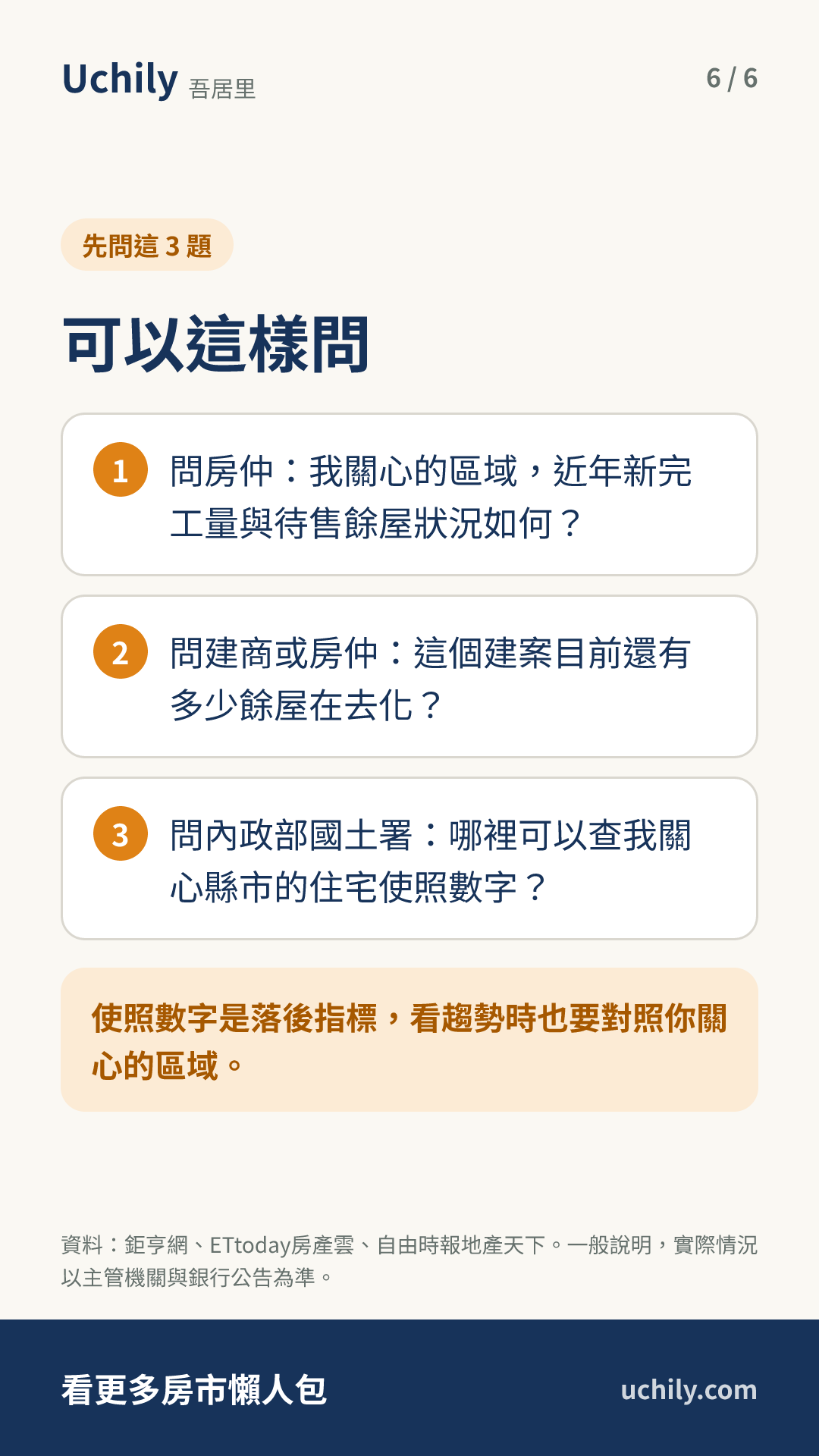
For people looking to buy or trade up, occupancy permit figures reflect development results from several years ago and should not be taken directly as current buyer demand. Increases and decreases vary widely among the six cities, so readers can look up the figures for the cities or counties they care about individually. Those who already have a mortgage may keep an eye on developers' current focus on selling unsold units and launching fewer new projects.
Quick quiz
2 questions; pick an answer to see the explanation
- By how much did residential occupancy permits issued in the six major cities in January to September 2026 fall compared with the same period last year?
- Which of the six major cities had the largest year-on-year drop in residential occupancy permits in the first 9 months?
Image cards
6 cards. Tap to enlarge; save and share with friends



Original:鉅亨網 · We only post summaries and key points. Read the original for the full story.
This week’s news, sorted for you
One Uchily newsletter a week, picking out what actually affects your wallet.
Subscribing creates a Uchily account with this email; open the link in the email to finish. You can unsubscribe from any email.