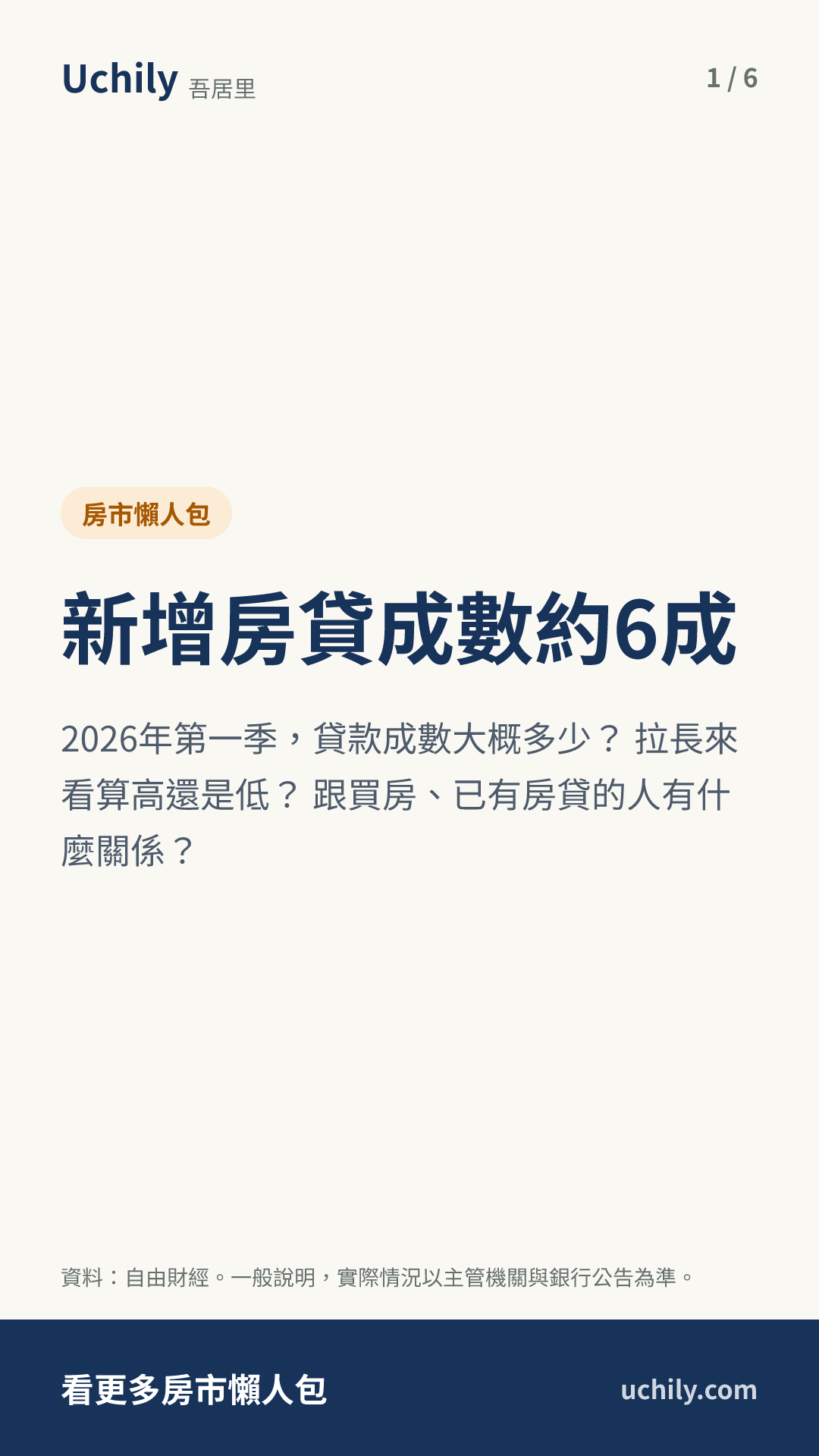
Average Loan-to-Value Ratio on New Mortgages Was About 60% in Q1 2026, Comparable to a Year Earlier
Data from the Ministry of the Interior's Real Estate Information Platform show that mortgage loan-to-value ratios have long mostly stayed at 60% or above, and all six special municipalities were also at 60% or above.

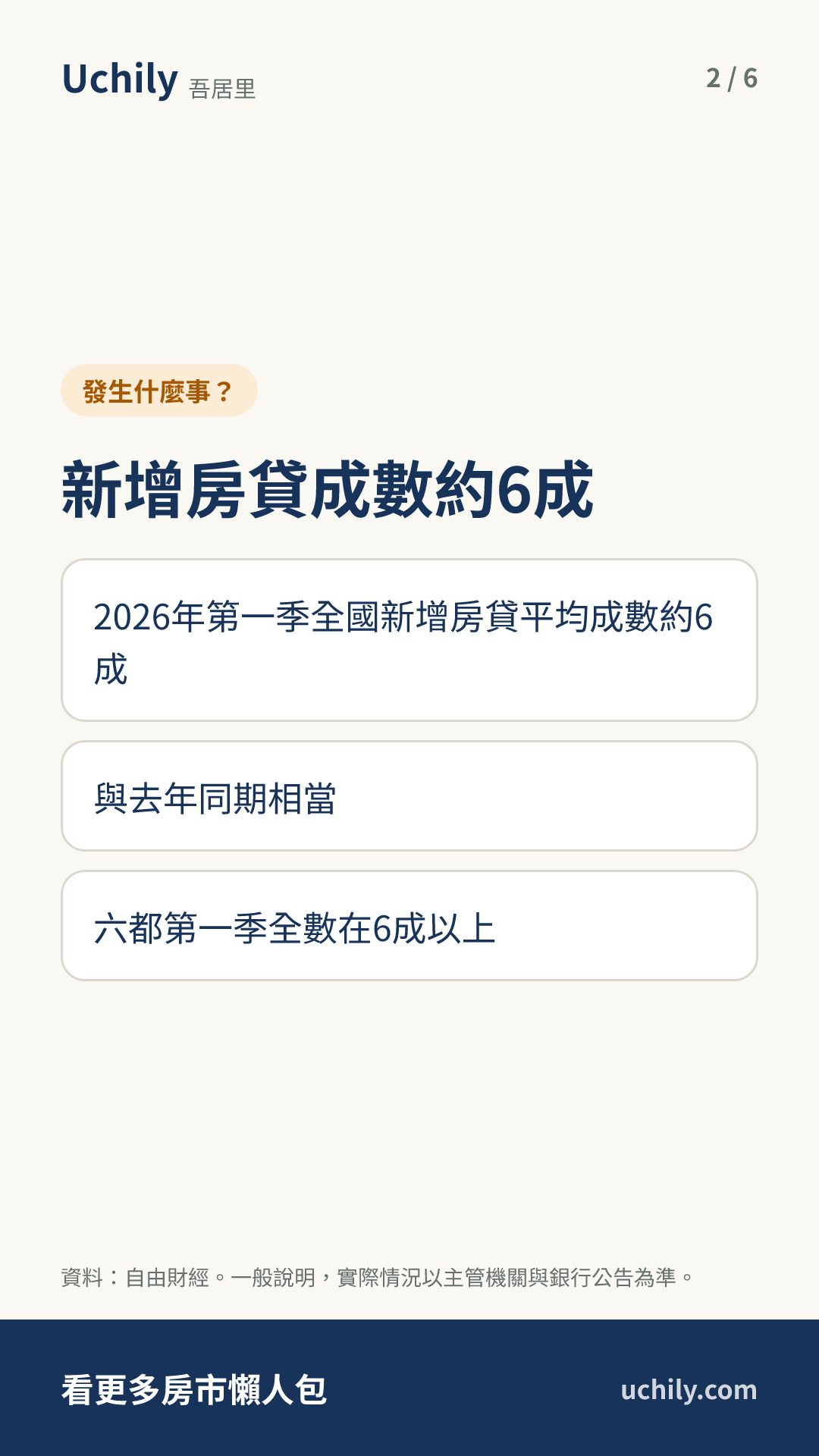
- Liberty Times Finance, citing Ministry of the Interior data: the nationwide average loan-to-value ratio on new mortgages in Q1 2026 was about 60%, comparable to the same period last year.
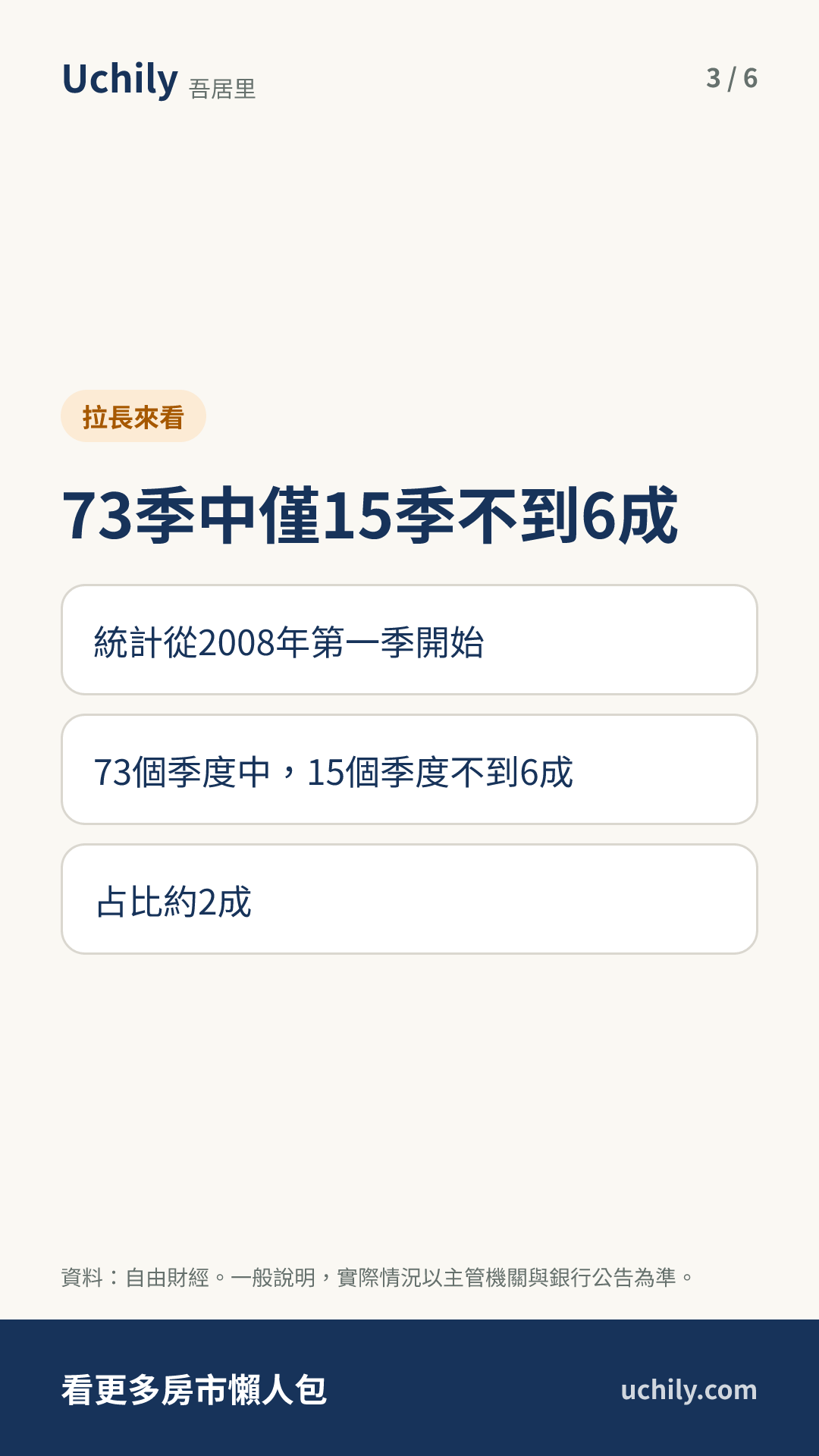
- Of the 73 quarters since statistics began in Q1 2008, only 15 quarters were below 60%, about 20%.
- The average loan-to-value ratio on new mortgages in all six special municipalities in Q1 2026 was 60% or above.
Since statistics began in Q1 2008, there have been 73 quarters in total, and the nationwide average mortgage loan-to-value ratio was below 60% in only 15 of them, about 20%. In other words, the roughly 60% in Q1 2026 falls within the level that has long been common.
Real estate industry sources said the highest ratio in the historical statistics was in Q1 2022, at about 64%.
Huang Shu-wei, director of Landlord Representation Services at Colliers International, said the average mortgage loan-to-value ratio does not change significantly when the housing market turns down. He believes home purchase financing is affected not only by banks' risk controls, but also by the borrower mix, the extent of home price corrections, and policy-supported loan terms.
Ho Shih-chang, CEO of Xinchuan Real Estate Think Tank, said Taiwan's average mortgage loan-to-value ratio is only about 60%, making it a relatively low-ratio country globally. He believes this reflects the far-reaching impact of the central bank's lending restrictions, rather than low demand among people to borrow for home purchases.
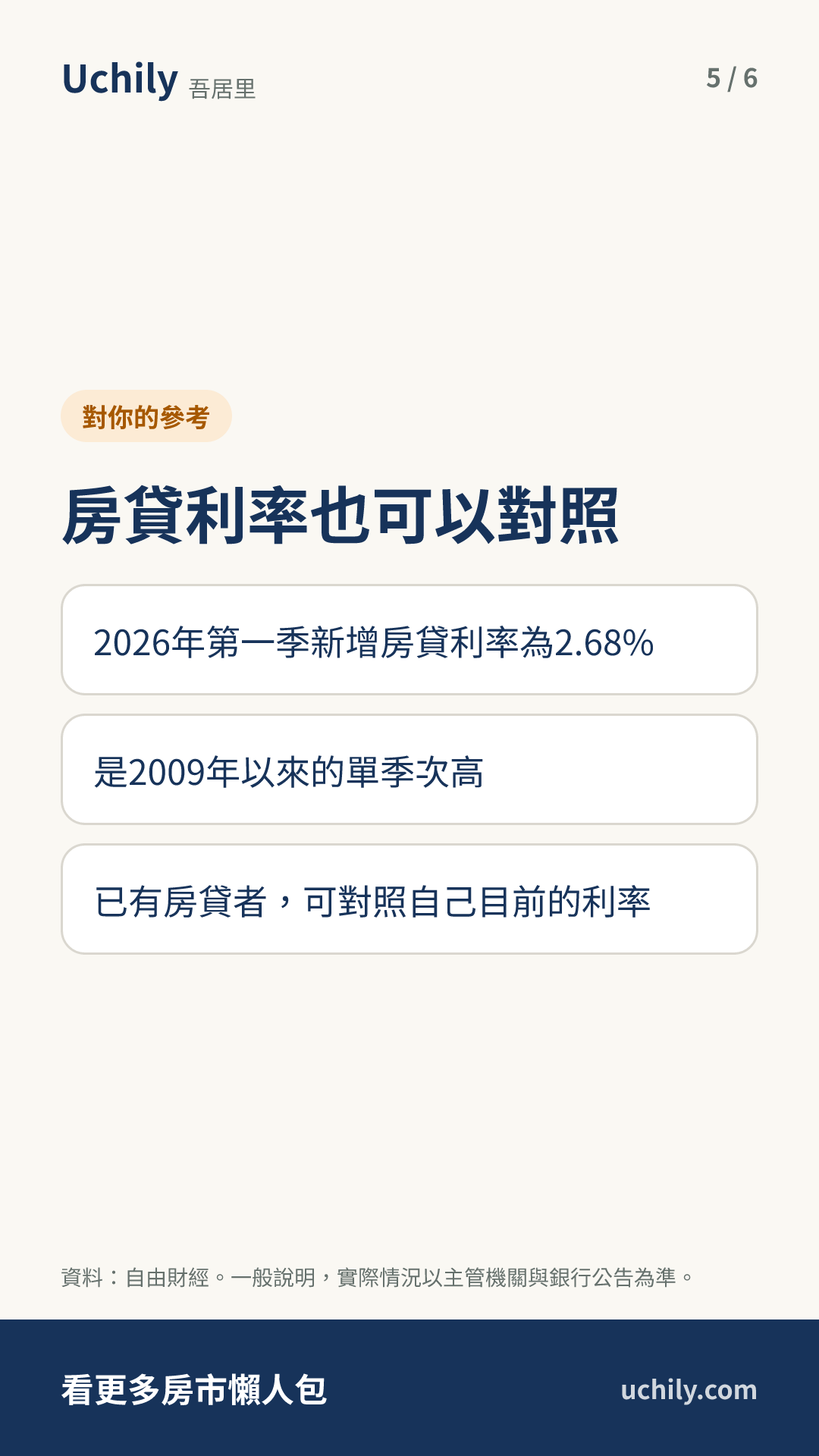
On interest rates, the nationwide rate on new mortgages in Q1 2026 was 2.68%, the second-highest quarterly rate since 2009, behind only the 2.69% in Q4 2025. The quarters with the lowest rates since statistics began were Q3 2021 and Q1 2022, both at about 1.52%.
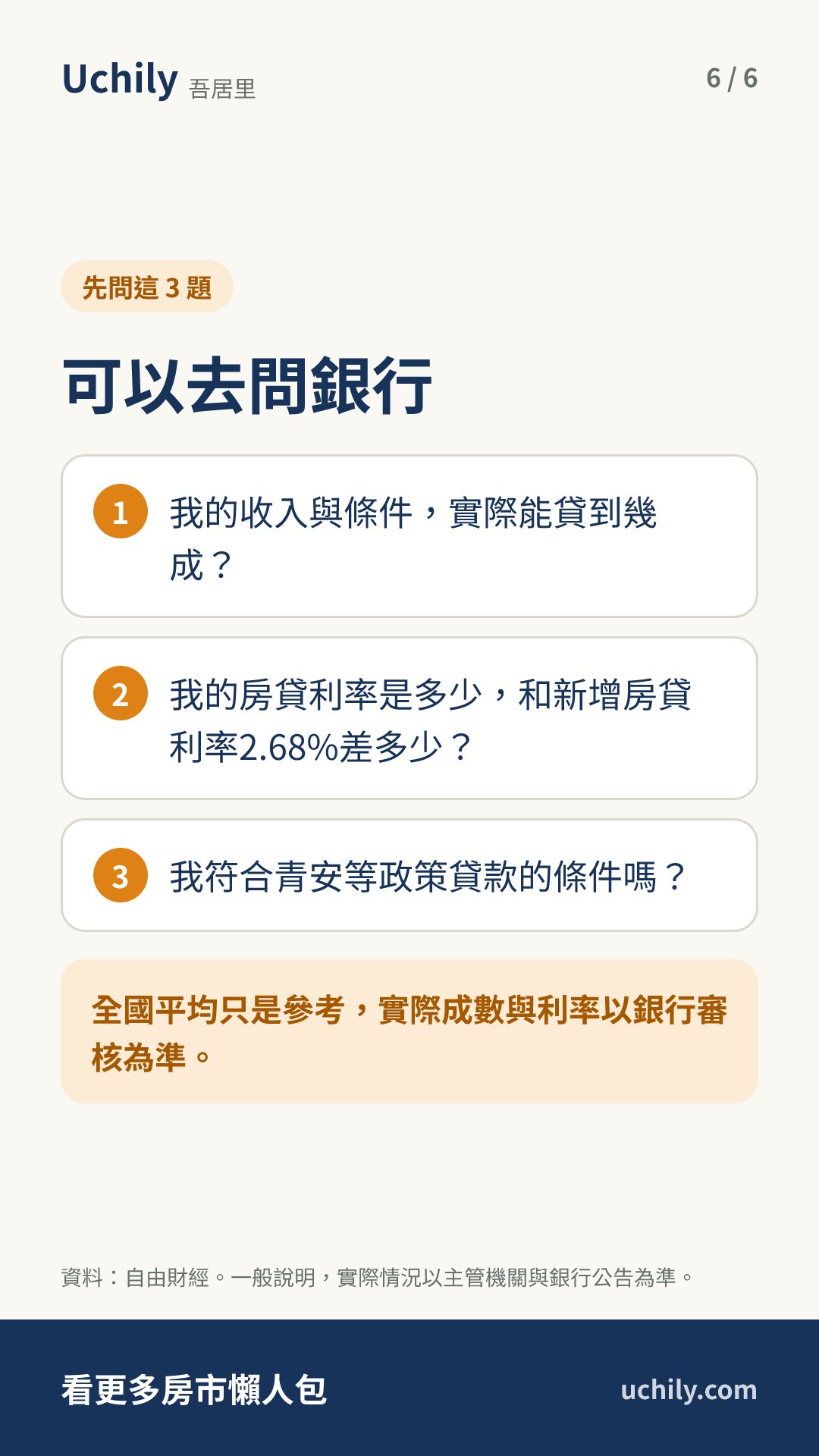
People planning to buy a home or trade up can use the nationwide average loan-to-value ratio of about 60% on new mortgages as a reference when planning their down payment; the actual ratio still depends on the bank's review. People who already have a mortgage can compare their current mortgage rate with the nationwide rate of 2.68% on new mortgages in Q1 2026.
Loan-to-value calculator
- Loan amount
- 1,400 × NT$10K
- Down payment
- 600 × NT$10K
- Monthly payment
- NT$54,023
- Total interest
- 545 × NT$10K
The default rate of 2.321% is the central bank’s published August average rate on new mortgages at the five major banks. Equal monthly payments, no grace period; the bank’s approval is final.
Quick quiz
2 questions; pick an answer to see the explanation
- Of the 73 quarters since statistics began in Q1 2008, in how many quarters was the nationwide average mortgage loan-to-value ratio below 60%?
- The nationwide rate on new mortgages in Q1 2026 was 2.68%. How does this figure rank among quarters since 2009?
Image cards
6 cards. Tap to enlarge; save and share with friends

Original:自由財經 · We only post summaries and key points. Read the original for the full story.
This week’s news, sorted for you
One Uchily newsletter a week, picking out what actually affects your wallet.
Subscribing creates a Uchily account with this email; open the link in the email to finish. You can unsubscribe from any email.