Banks' Real Estate Lending Ratio at 23.79%, All 36 Below 27%
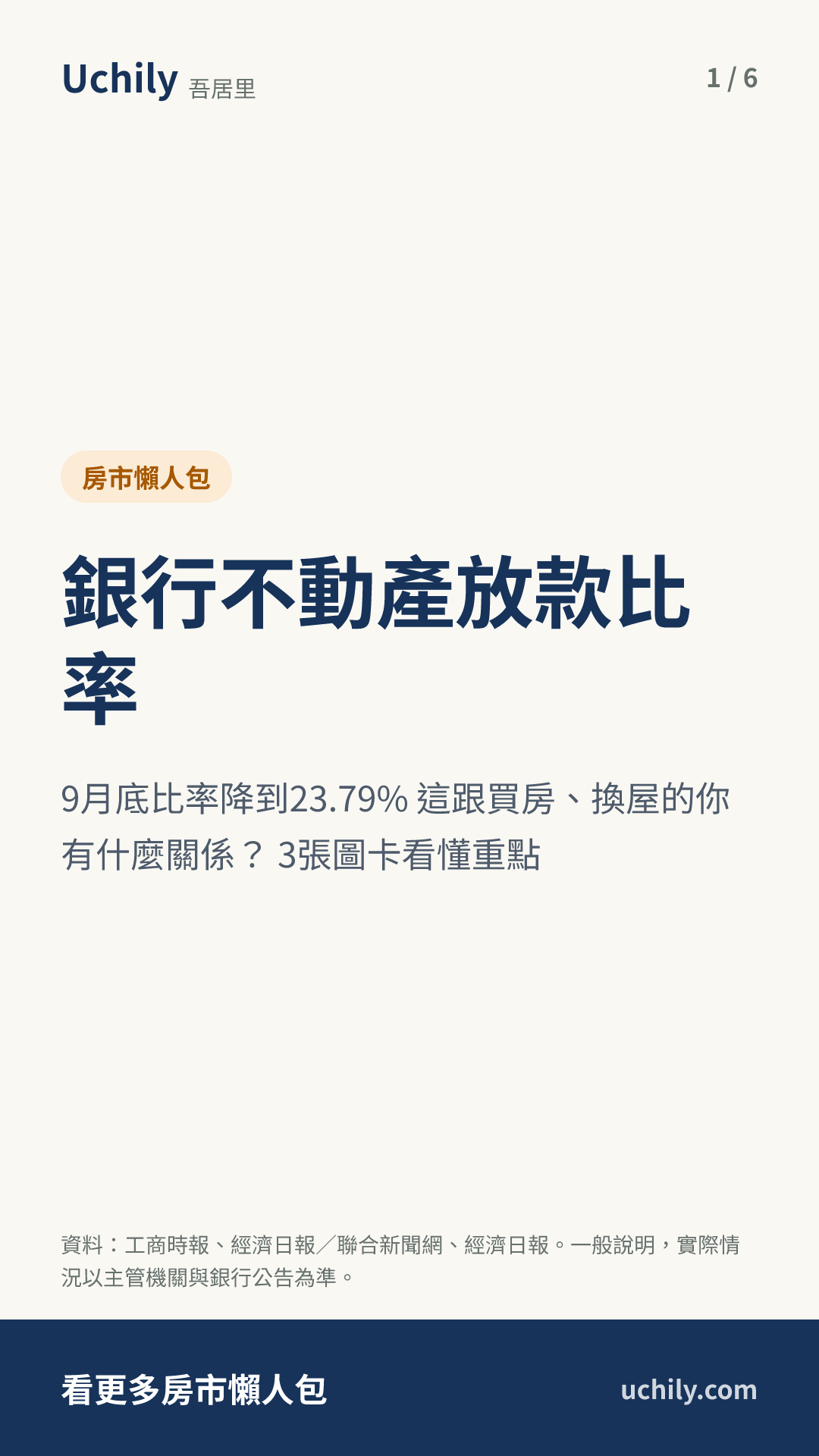
At the end of September 2026, the average real estate lending ratio of domestic banks fell to 23.79%, with no bank above 27%, while outstanding mortgages continued to rise.

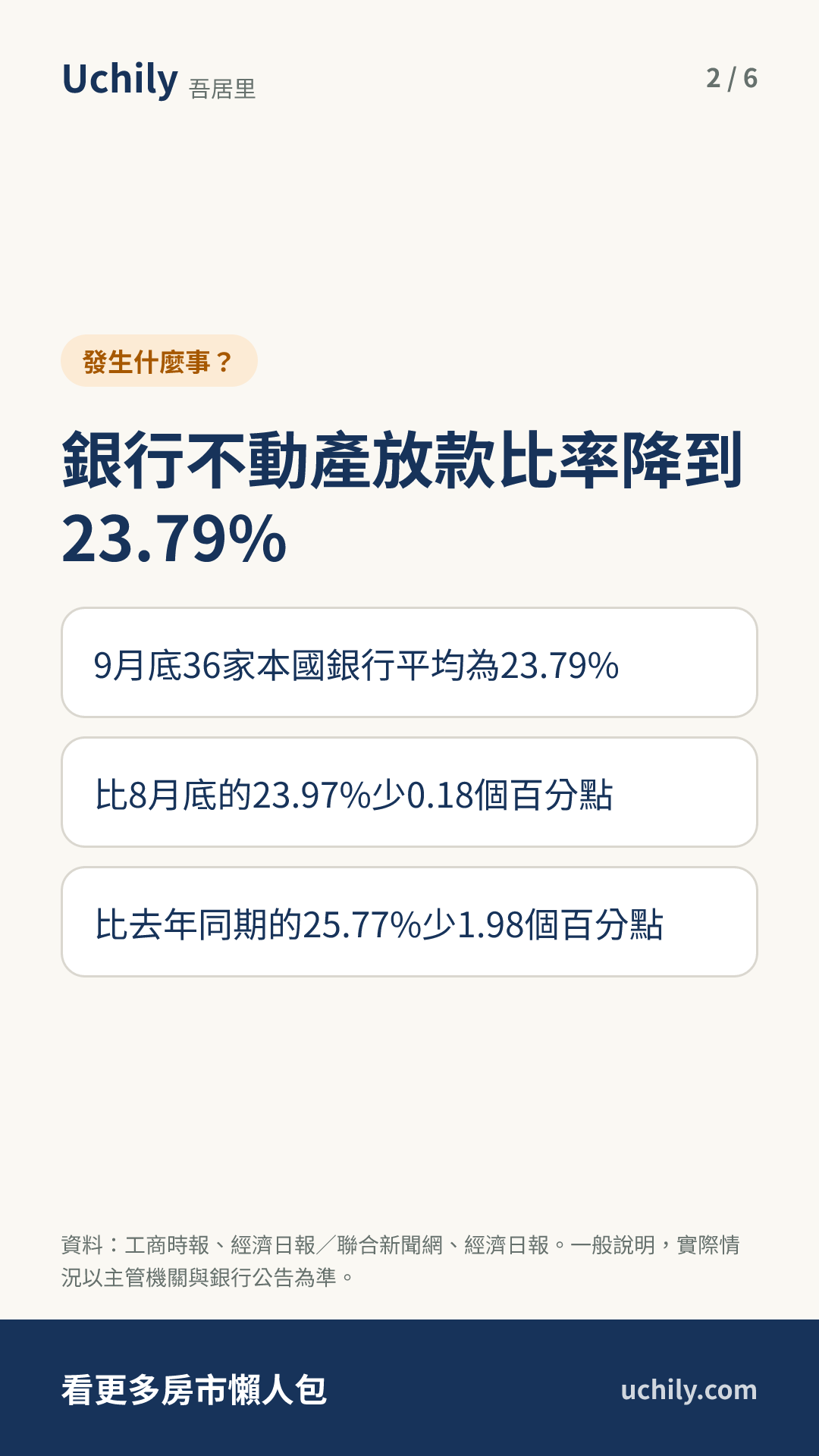
- According to the Financial Supervisory Commission, at the end of September 2026 the average real estate lending ratio of the 36 domestic banks was 23.79%, a new low in nearly 16 years.
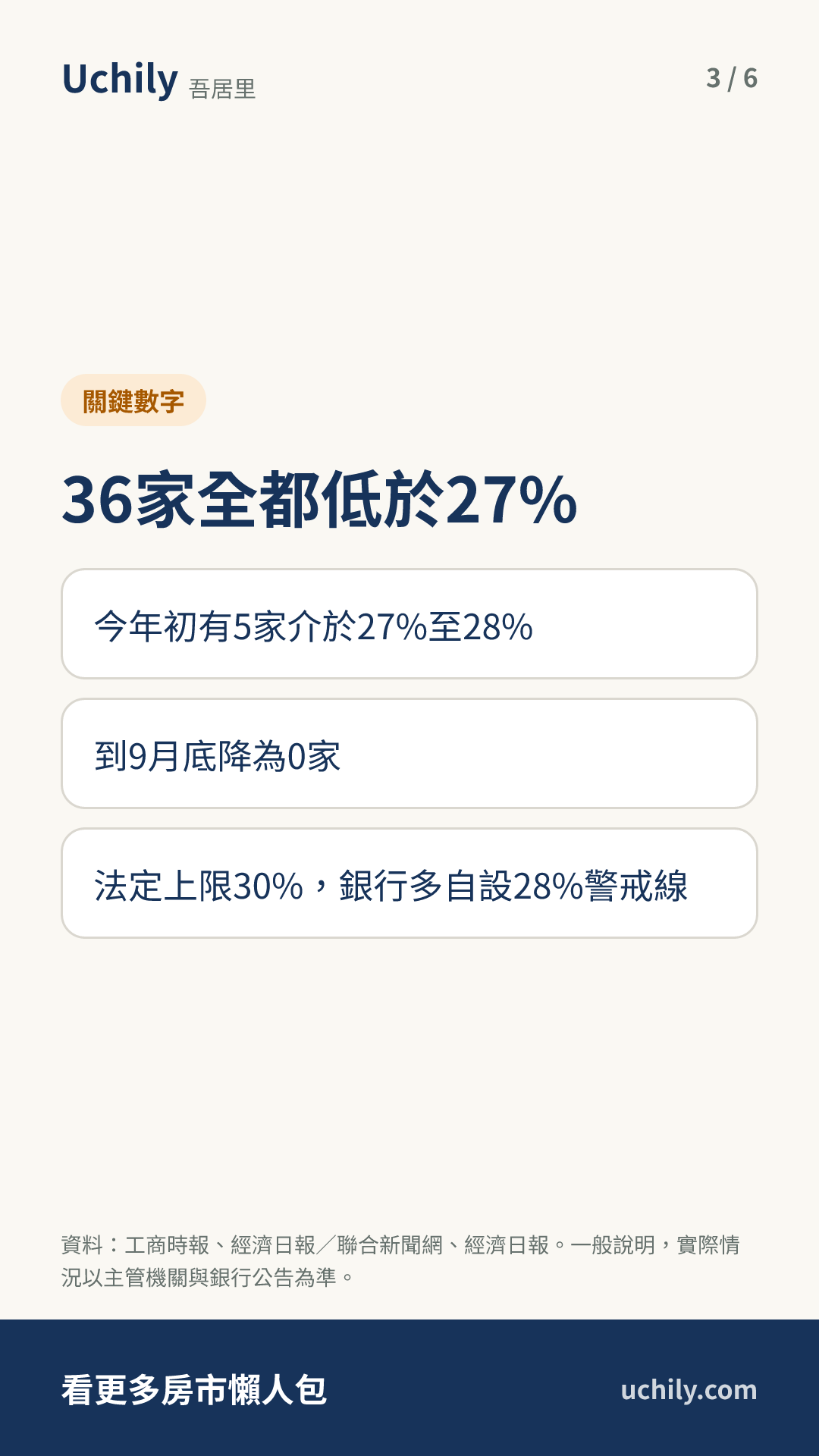
- At the end of September 2026, the ratios of all 36 domestic banks were below 27%; earlier this year, 5 banks were between 27% and 28%.
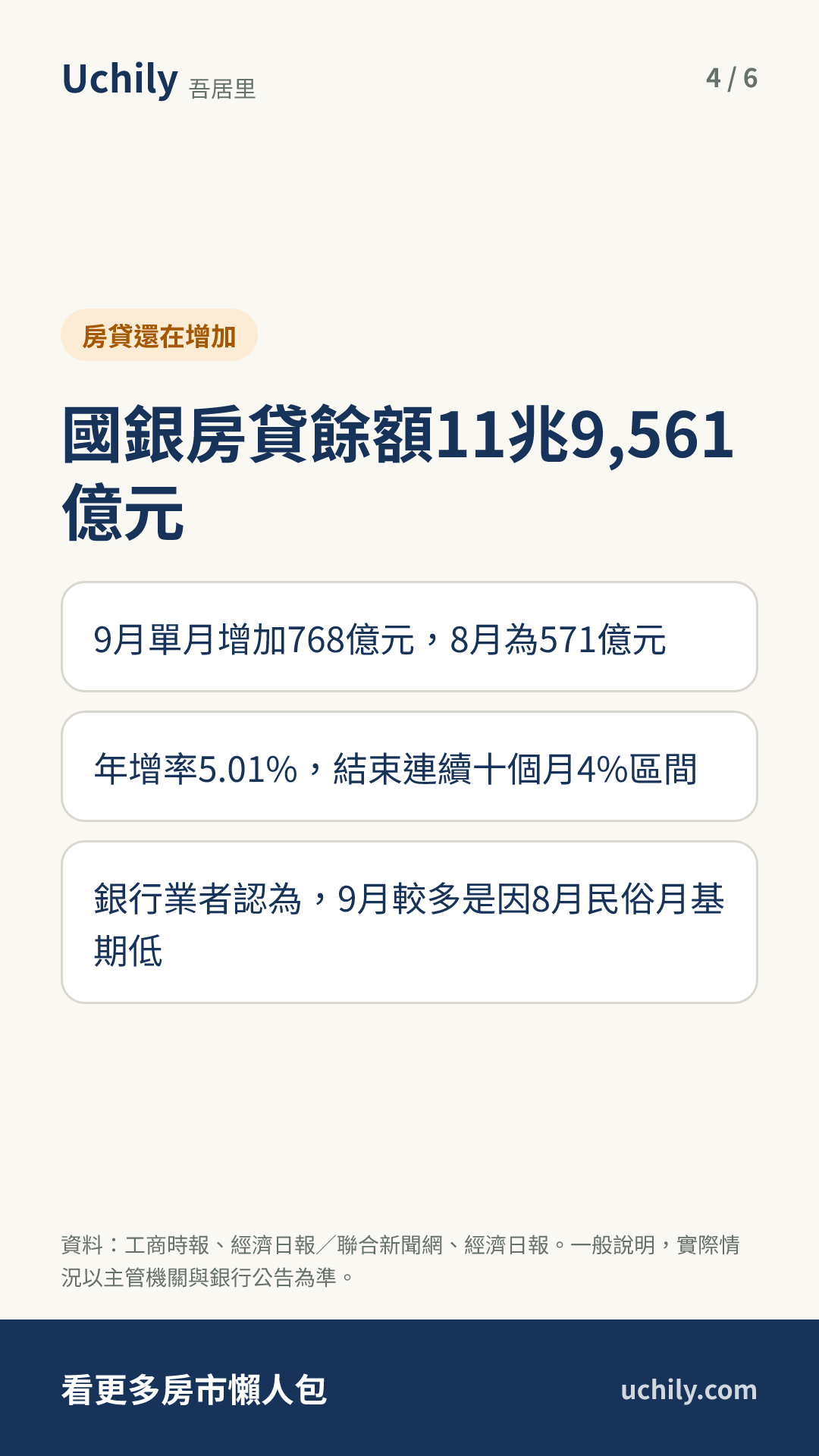
- At the end of September 2026, outstanding mortgages at domestic banks stood at NT$11 trillion 9,561 hundred million, with the year-on-year growth rate rising to 5.01%.
This ratio is the one under Article 72-2 of the Banking Act. At the end of September 2026, the 36 domestic banks (excluding Land Bank of Taiwan and the Export-Import Bank of the R.O.C.) averaged 23.79%, down 0.18 percentage points from 23.97% at the end of August and down 1.98 percentage points from 25.77% in the same period last year.
Under Article 72-2 of the Banking Act, a bank's total housing loans and corporate construction loans may not exceed 30% of its total deposits plus total financial debentures, which the market regards as the "golden rule" for real estate lending. Banking industry sources said that, to avoid hitting the cap, banks usually set an internal warning line of 28%, which has also been one of the reasons mortgage quotas were tight in the past.
Earlier this year, 5 banks had ratios between 27% and 28%; from June to August the number fell to just 1, and in September it dropped to 0. Since the start of this year, the number of banks with a ratio of 28% or above has been 0.
At the end of September 2026, outstanding real estate loans were NT$15.76 trillion, an increase of about NT$40 billion from August; outstanding total deposits plus financial debentures were NT$66.26 trillion, an increase of about NT$690 billion in a single month. Banking sources said that since September 2025, Youth Home Loan loans have been excluded from the numerator, and together with a cooling housing market and slower growth in real estate lending, this has helped push the ratio down.
The scale of mortgages is still growing. Outstanding mortgages at domestic banks rose by NT$76.8 billion in September alone, compared with NT$57.1 billion in August, and the year-on-year growth rate rose to 5.01%, ending ten consecutive months in the 4% range; banking industry sources believe the larger monthly increase in September was mainly because the Ghost Month in August made for a lower base. The Banking Bureau said that outstanding mortgages have increased month by month since they passed NT$11 trillion in December 2024, with a cumulative increase of NT$444.876 billion in the first nine months of this year. The central bank announced on the 27th that outstanding home purchase loans exceeded NT$12 trillion for the first time in September, reaching NT$12.02 trillion, a record high; outstanding construction loans fell to NT$3.39 trillion, with a year-on-year growth rate of -0.99%, the fourth consecutive month of negative growth.
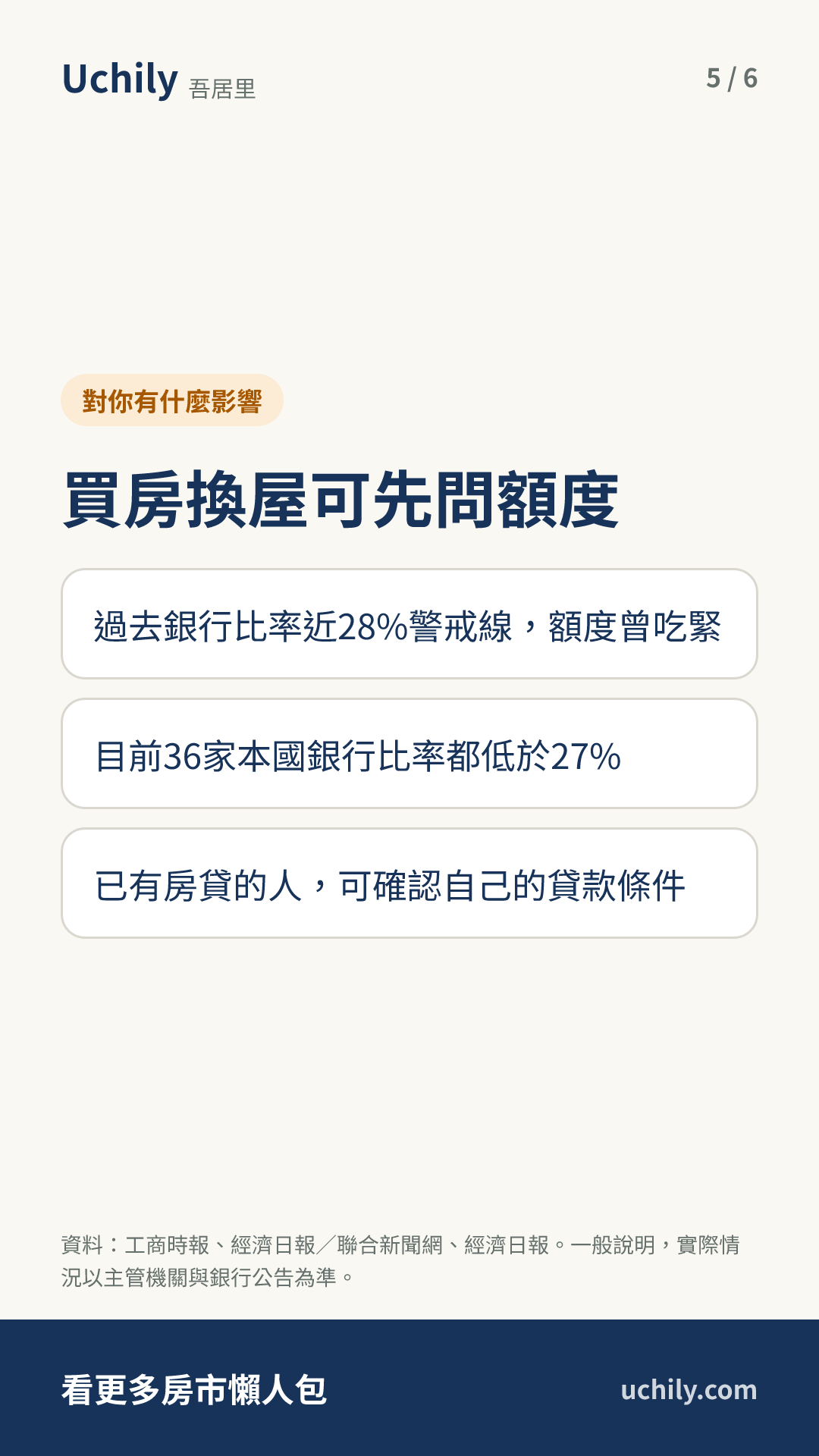
People who want to buy or trade up to a home can check with banks about their mortgage quota and conditions. In the past, when banks' ratios were close to the 28% internal warning line, mortgage quotas were tight; currently, the ratios of all 36 domestic banks are below 27%. People who already have a mortgage can check their loan conditions.
Quick quiz
2 questions; pick an answer to see the explanation
- At the end of September 2026, what was the average Banking Act Article 72-2 ratio of the 36 domestic banks?
- At the end of September 2026, how many domestic banks had a ratio above 27%?
Image cards
6 cards. Tap to enlarge; save and share with friends

Original:工商時報 · We only post summaries and key points. Read the original for the full story.
This week’s news, sorted for you
One Uchily newsletter a week, picking out what actually affects your wallet.
Subscribing creates a Uchily account with this email; open the link in the email to finish. You can unsubscribe from any email.