Can a luxury home loan be fully shifted to a fourth property to get a lower ratio?
The Central Bank caps loans on high-priced housing at 30% and also regulates additional borrowing, pledging other real estate, and adding collateral; if the funds are used to buy a luxury home, they must still be counted together.

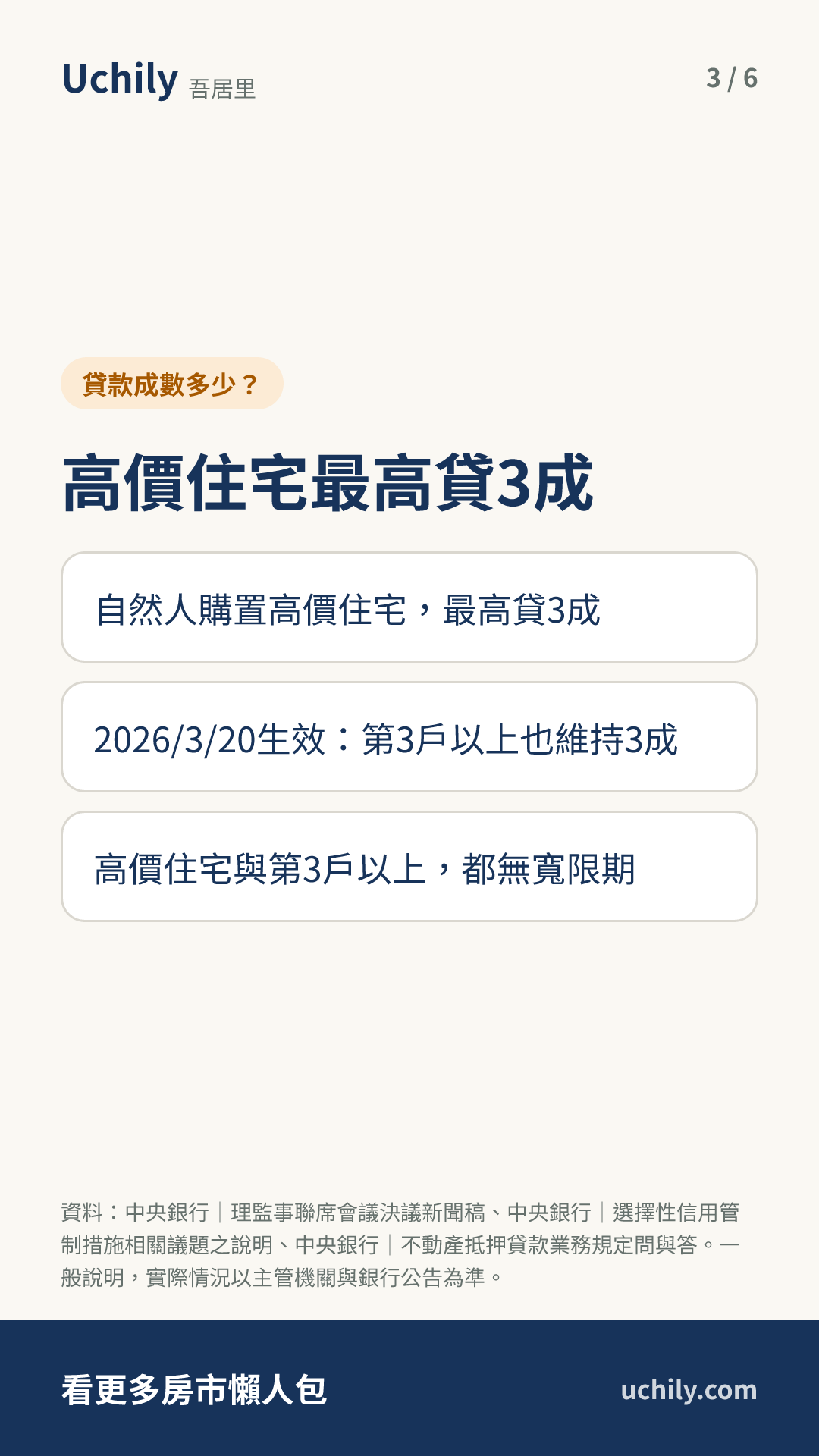
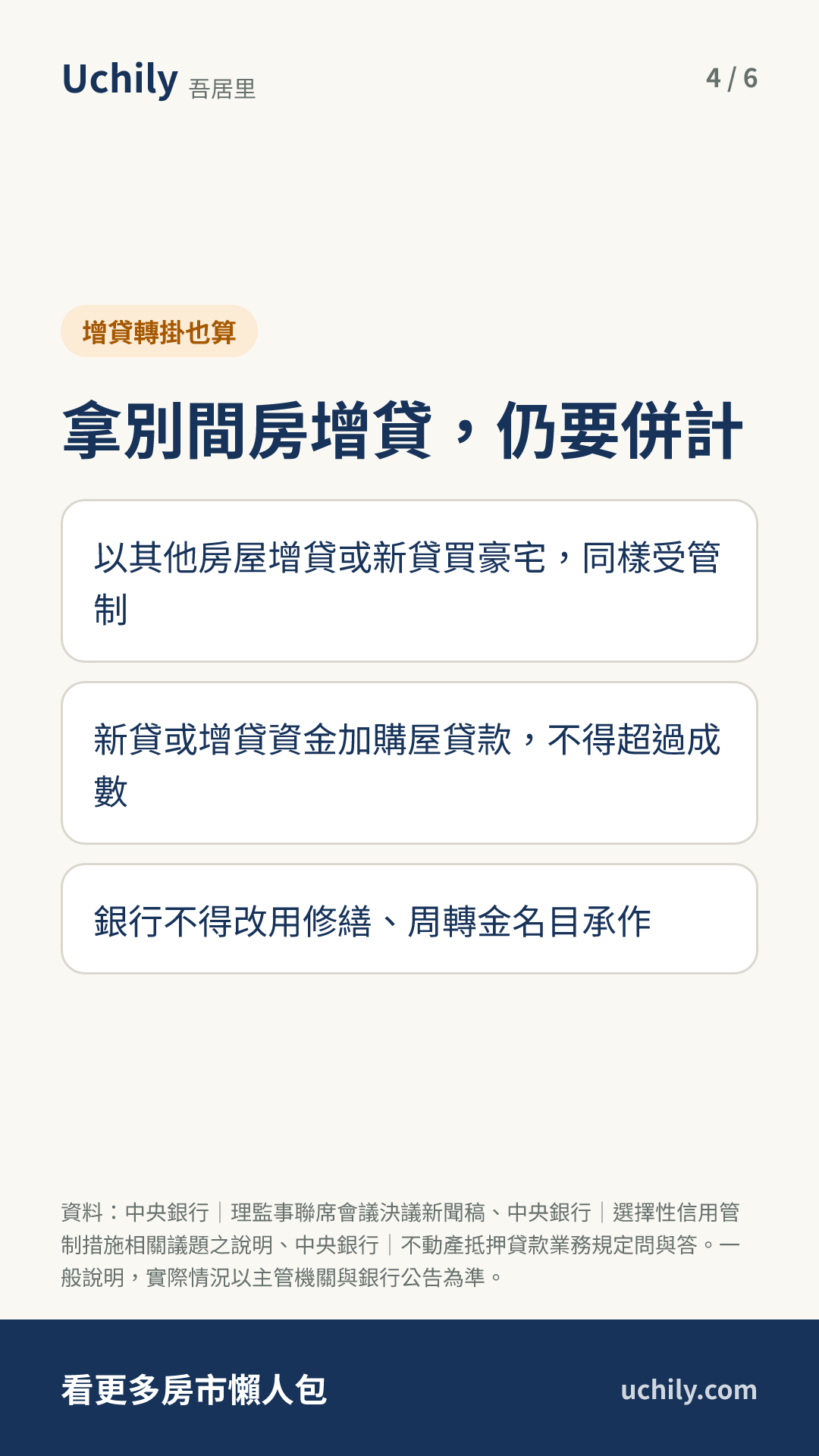
- The Central Bank caps loans on high-priced housing at 30%; if additional borrowing against another property or a shift to another property is used, the funds must still be counted toward the ratio as long as they are used to buy a luxury home.
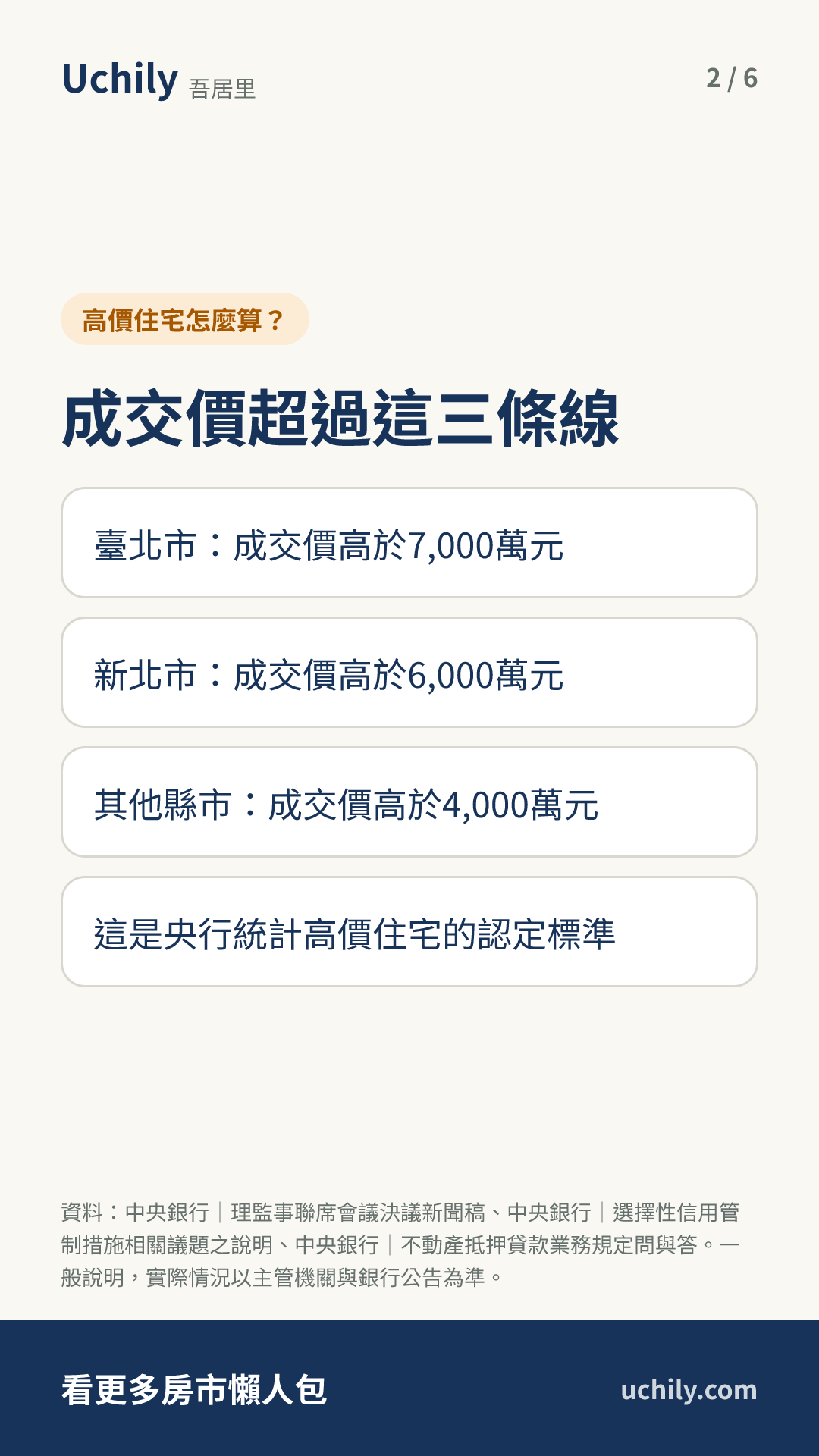
- High-priced housing means homes with a sale price above NT$70 million in Taipei, NT$60 million in New Taipei, and NT$40 million in other counties and cities.
- Under the rules effective March 20, 2026, home loans for natural persons buying a third (or more) property also remain at 30%, with no grace period.
The Central Bank has gradually tightened the loan-to-value cap on high-priced housing: 60% in December 2010; in March 2021 it was lowered to 55% (5.5 tenths, for those who already have mortgages on 2 or fewer properties) and 40% (for those who already have mortgages on 3 or more properties); 40% in December 2021; and 30% in September 2024. In the adjustment effective September 20, 2024, the ratios for corporate-entity housing loans, natural-person loans for high-priced housing, and home loans for a third (or more) property were all lowered from 40% to 30%. In the comparison table of amendments effective March 20, 2026, these three categories remain at 30% with no grace period.
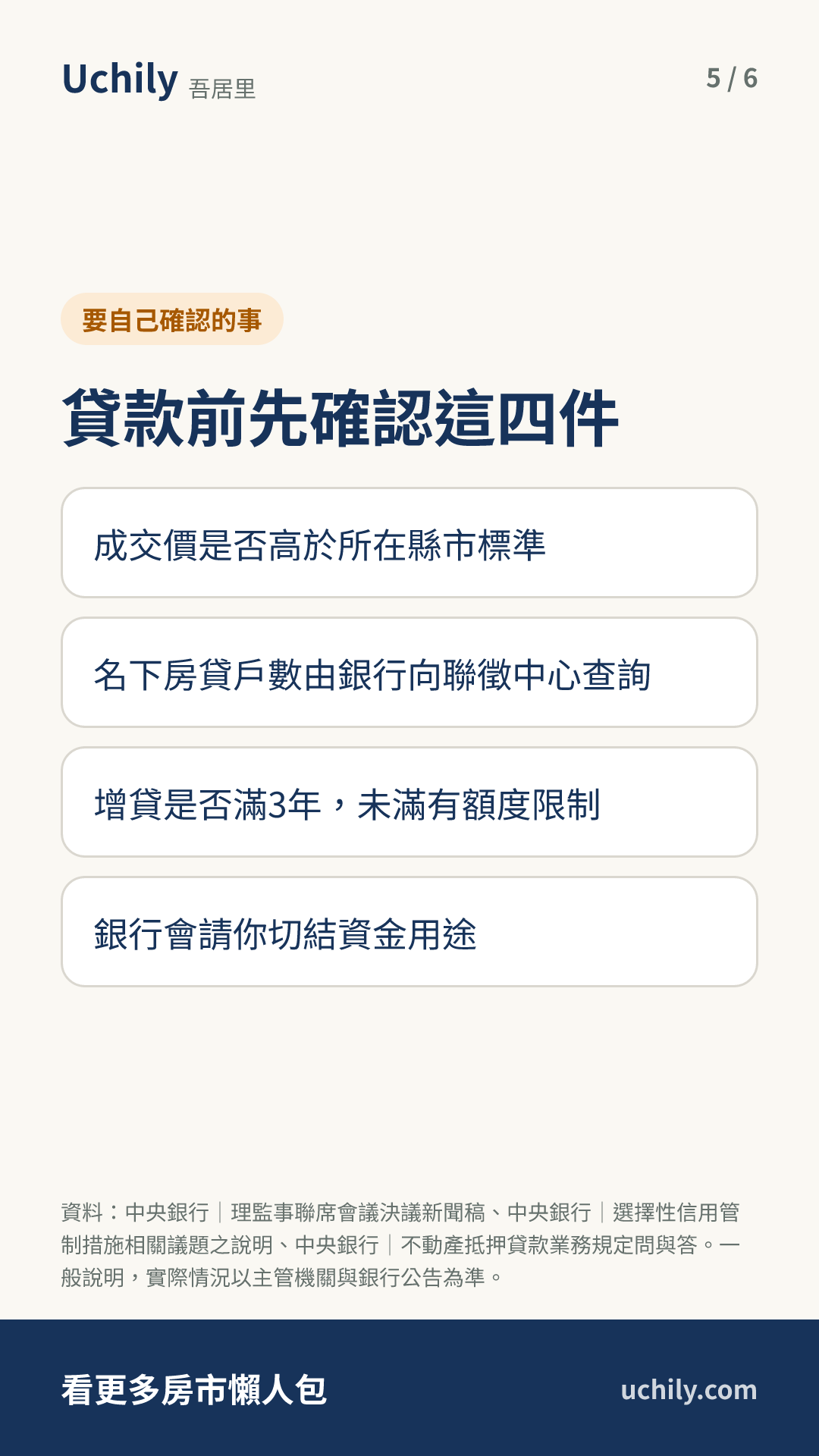
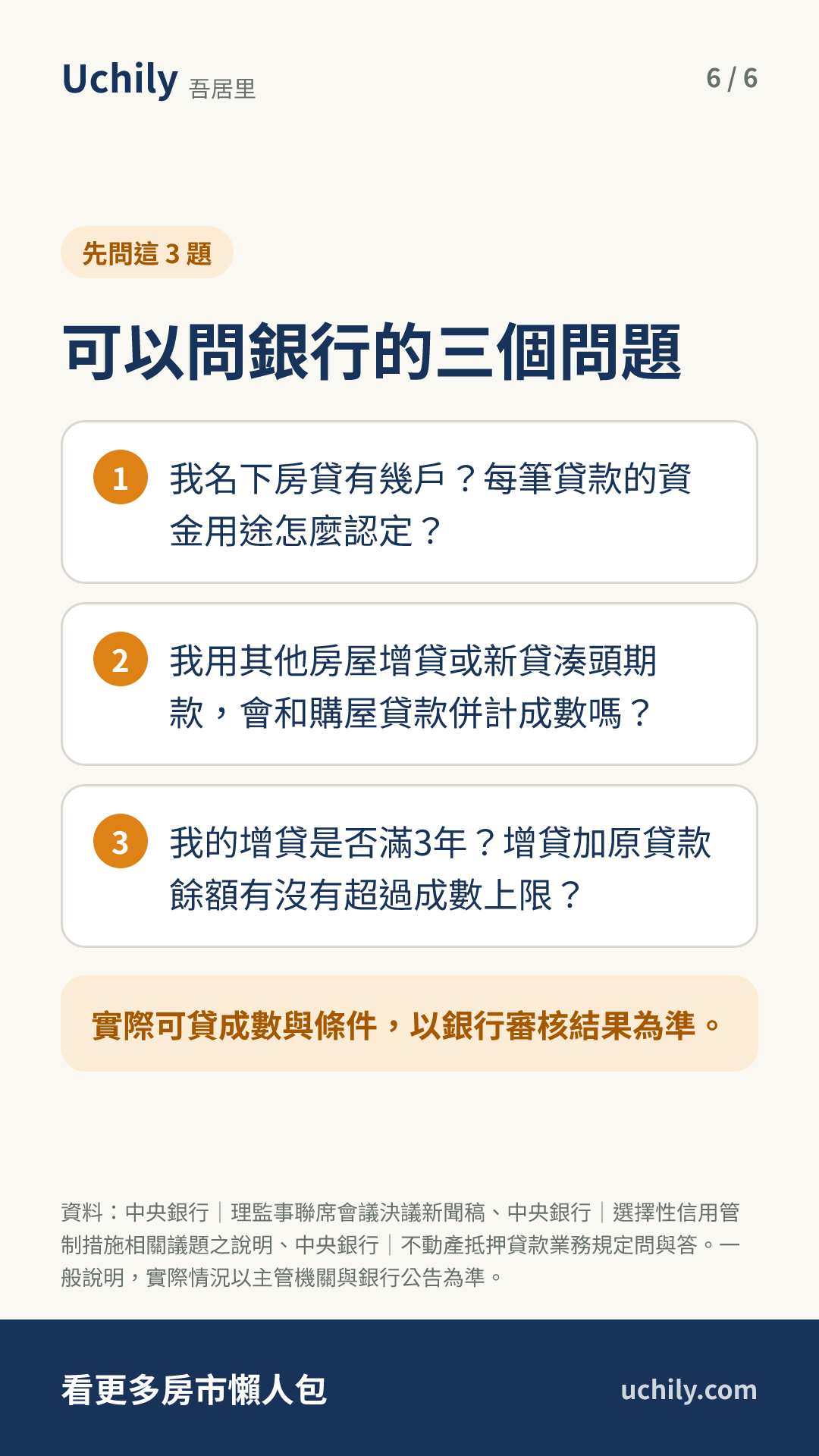
As for shifting a loan to another property, the Central Bank's amended Q&A of March 19, 2021 already has corresponding provisions. If a natural person takes additional borrowing on an existing mortgage, or pledges other real estate to obtain a new loan, the loan is subject to the same controls as long as the funds are used to buy high-priced housing and the application is made against that housing; the new or additional borrowing, added to the loan amount for buying the high-priced housing, may not exceed the prescribed ratio. When a person who already has mortgages on 2 or more properties applies for a loan against another property (including its land), the financial institution should verify the purpose of the loan; if the purpose is buying housing, the controls apply, and the borrower must sign a statement of the use of funds when consenting to the loan application, which is checked afterward.
The Q&A also limits what banks may do: they may not issue loans for buying high-priced housing under the label of renovation, working capital, or other loan purposes; they may not reclassify a mortgage with the original fund-use code "1" in the Joint Credit Information Center (JCIC) records as use code "4"; and they may not add collateral to increase the loan amount. The exception is when a borrower takes a loan from a financial institution pledging his or her own time deposit certificate and uses the funds to buy that housing; this is not considered increasing the loan amount under another loan purpose. If a financial institution violates the rules, the competent authority will impose penalties under provisions including Articles 130 and 134 of the Banking Act.
There are also rules on how the number of properties is counted: the number of mortgaged properties under a person's name is looked up by the financial institution through the JCIC by person, and the count covers secured loans with the property as collateral and fund-use code "1", with 1 piece of collateral counting as 1 property. If a person owns 2 or more properties but has no loans on any of them and the JCIC has no mortgage record, the rules for a third (or more) property do not apply to this home loan application. The 2021 Q&A still distinguishes between the third property and the fourth or more, while the current comparison table lists the third (or more) property at 30% across the board.
The Central Bank explained that high-priced housing is a niche market with high and volatile prices, low liquidity, and high credit risk, and that credit resources should be given first to those without a home of their own. The Central Bank also said that, according to actual-price registration (sold prices) statistics, over the past five years the number of sales nationwide meeting the high-priced housing criteria has accounted for less than 2% of all housing sales.
People who want to buy a luxury home should first confirm whether the sale price is above the threshold for the county or city where it is located, and then ask the bank to explain the number of mortgaged properties under their name and the use of funds for each loan. If they plan to use additional borrowing against another property or a separate new loan to put together a down payment, they should first ask the bank whether those funds will be counted together with the home loan for the ratio, and prepare a signed statement of the use of funds. For those who already have a mortgage and use additional borrowing to raise money for a luxury home, the additional amount must likewise be counted together with the home loan for the ratio.
Loan-to-value calculator
- Loan amount
- 1,400 × NT$10K
- Down payment
- 600 × NT$10K
- Monthly payment
- NT$54,023
- Total interest
- 545 × NT$10K
The default rate of 2.321% is the central bank’s published August average rate on new mortgages at the five major banks. Equal monthly payments, no grace period; the bank’s approval is final.
Quick quiz
2 questions; pick an answer to see the explanation
- Under the criteria the Central Bank uses for its high-priced housing statistics, how high must the sale price be for a home in Taipei to count as high-priced housing?
- If a natural person pledges other real estate to obtain a new loan and the funds are used to buy high-priced housing, how is the ratio calculated?
Image cards
6 cards. Tap to enlarge; save and share with friends
Original:中央銀行|理監事聯席會議決議新聞稿 · We only post summaries and key points. Read the original for the full story.
This week’s news, sorted for you
One Uchily newsletter a week, picking out what actually affects your wallet.
Subscribing creates a Uchily account with this email; open the link in the email to finish. You can unsubscribe from any email.