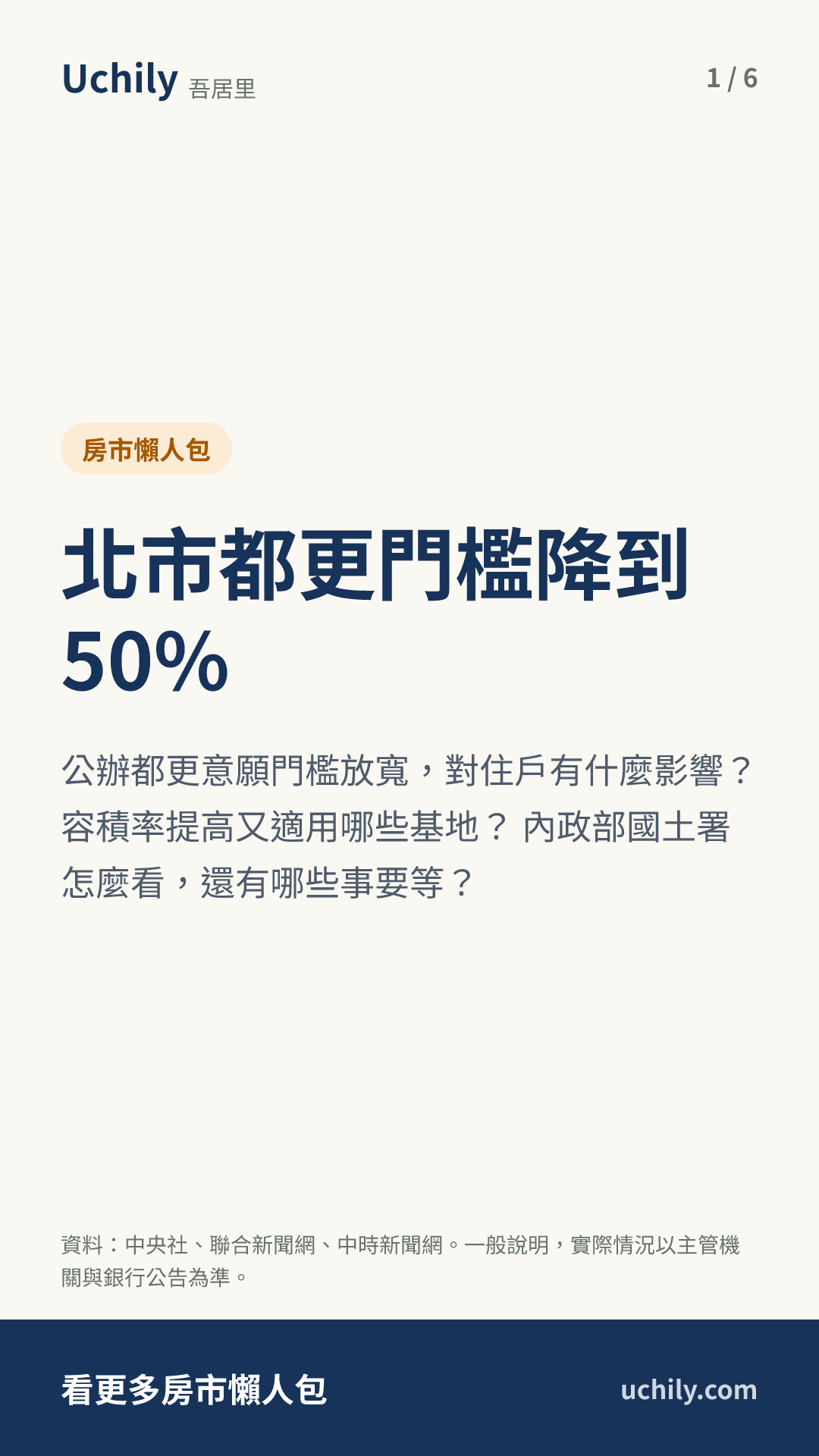
Taipei urban renewal consent threshold cut from 75% to 50%; National Land Management Agency says the key is review
Taipei Mayor Chiang Wan-an announced a relaxed threshold for publicly led urban renewal. Tsai Chang-chan, head of the Ministry of the Interior's National Land Management Agency, said the measure is "not a bad thing," but that shortening urban renewal timelines depends on speeding up review.

- The Central News Agency reported that Taipei's consent threshold for publicly led urban renewal has been lowered from 75% to 50%, and that Tsai Chang-chan, head of the Ministry of the Interior's National Land Management Agency, said the key is review.
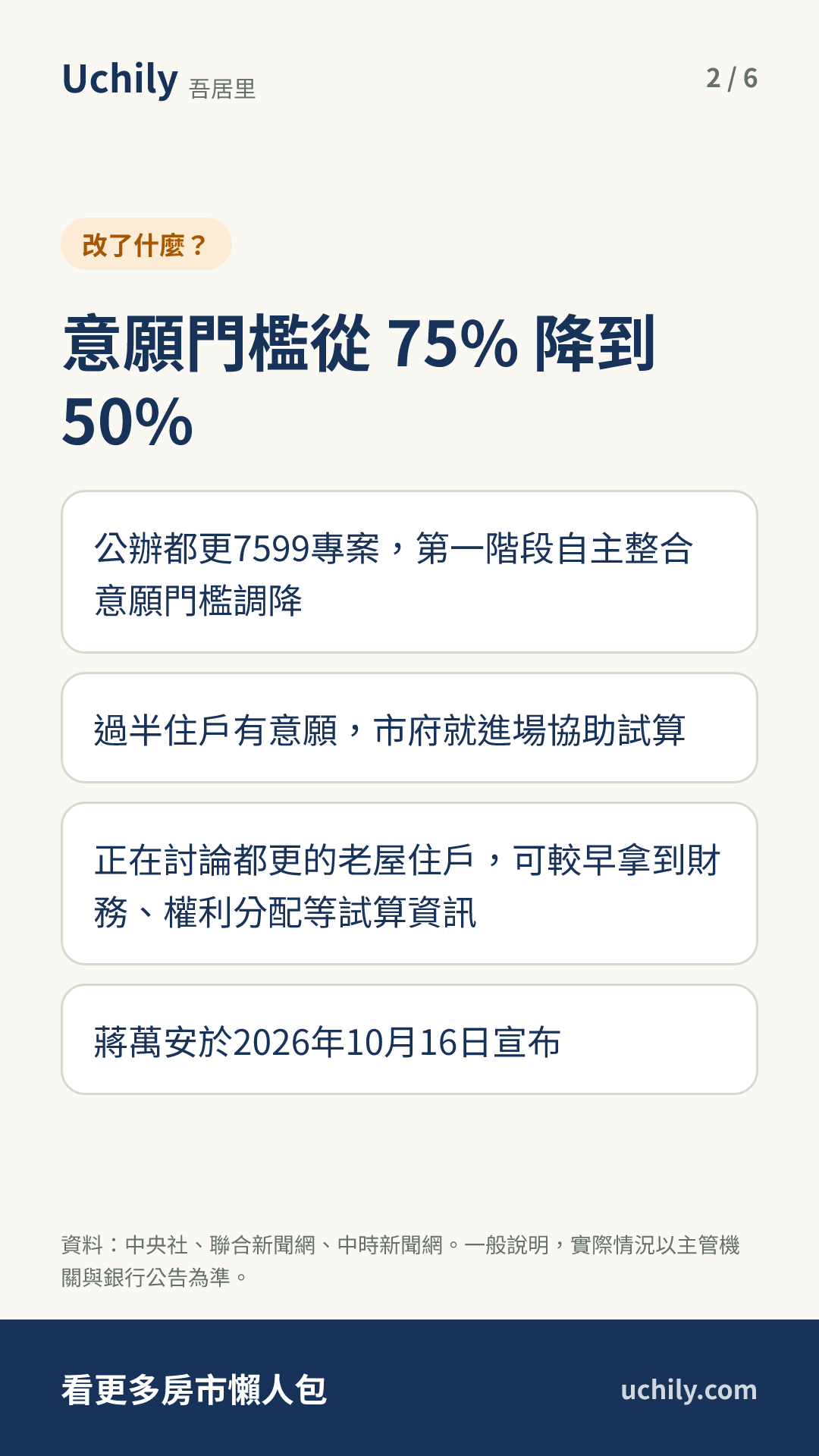
- After the first-stage self-organized consolidation consent threshold for Taipei's publicly led urban renewal was lowered to 50%, the city government steps in to help with calculations once more than half of residents are willing.
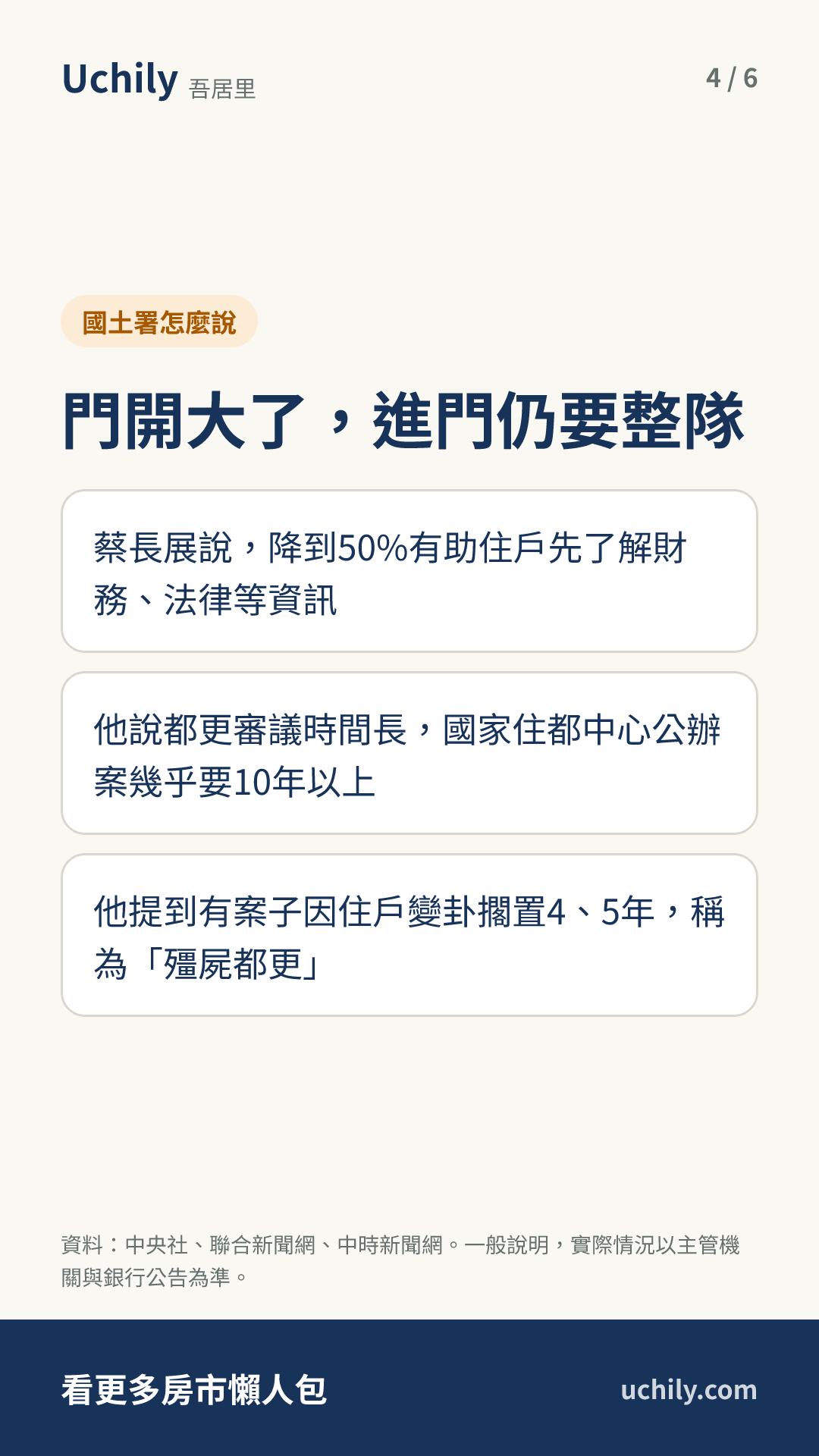
- Tsai Chang-chan, head of the Ministry of the Interior's National Land Management Agency, said publicly led urban renewal cases take a long time to review, and nearly all cases promoted by the National Housing and Urban Regeneration Center take more than 10 years.
On October 16, 2026, Chiang Wan-an said that the first-stage self-organized consolidation consent threshold of the current "Publicly Led Urban Renewal 7599 Project" has been lowered from 75% to 50%, and that as long as more than half of residents are willing, the city government will step in to help with calculations.
Tsai Chang-chan responded to media questions on October 22, 2026, at a press conference after the Ministry of the Interior's departmental meeting. He said that lowering the threshold to 50% helps residents first understand information on the finances, legal issues, construction, agreements and rights allocation involved in urban renewal, that it is "not a bad thing," and that it has related benefits. He used a "door" as a metaphor: the original door was narrow and residents queued outside; now the door has been opened wider, which only lets residents get in faster, and once inside they still have to line up in order before they can keep moving forward.
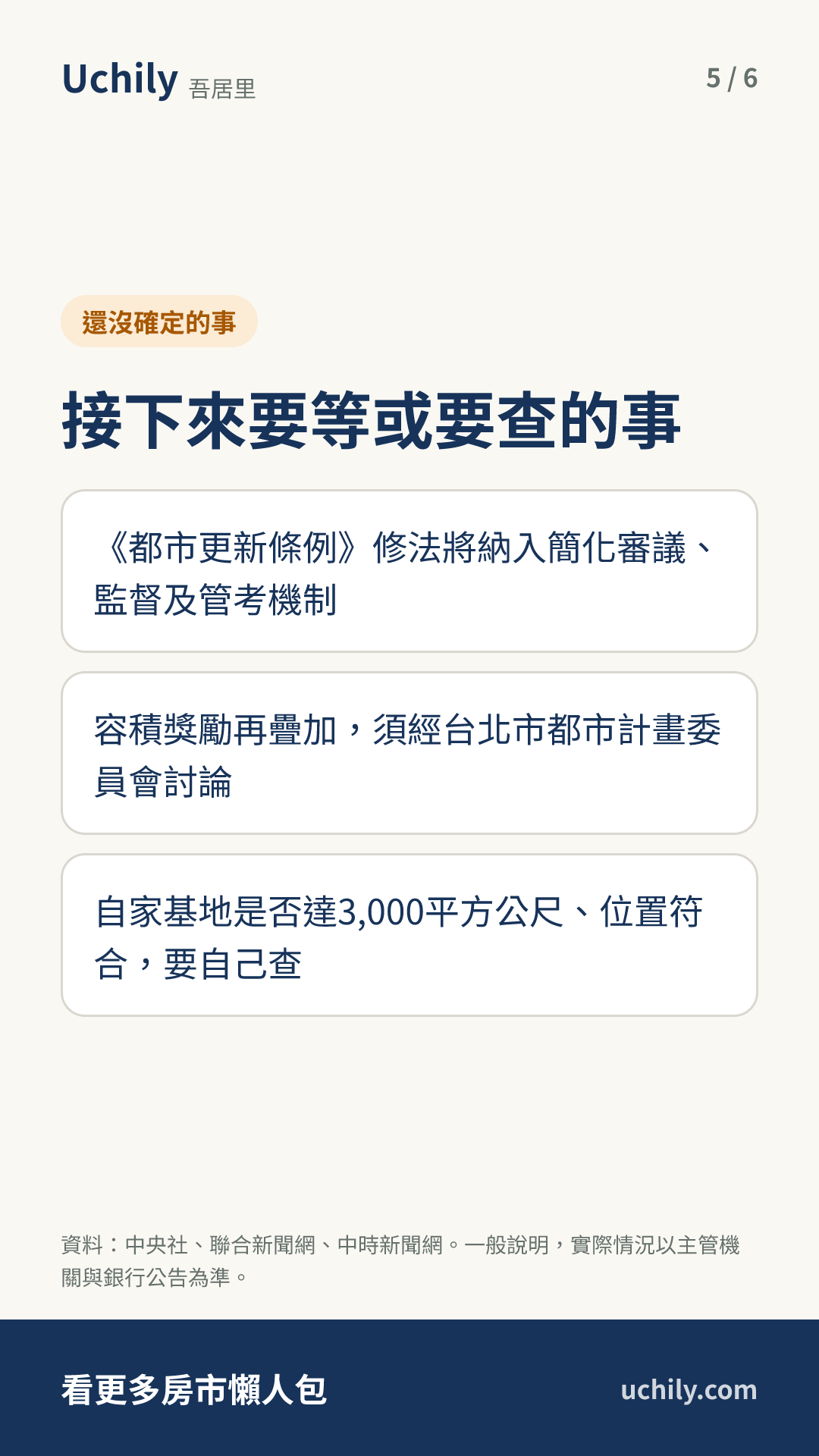
Tsai Chang-chan said that urban renewal cases involve different specialties and take a long time to review. Some urban renewal cases have been shelved for 4 to 5 years because residents changed their minds, which is known as "zombie urban renewal." He said that the current amendment to the Urban Renewal Act will include mechanisms for simplified review, supervision and performance tracking, and will establish a mechanism for public-sector intervention.
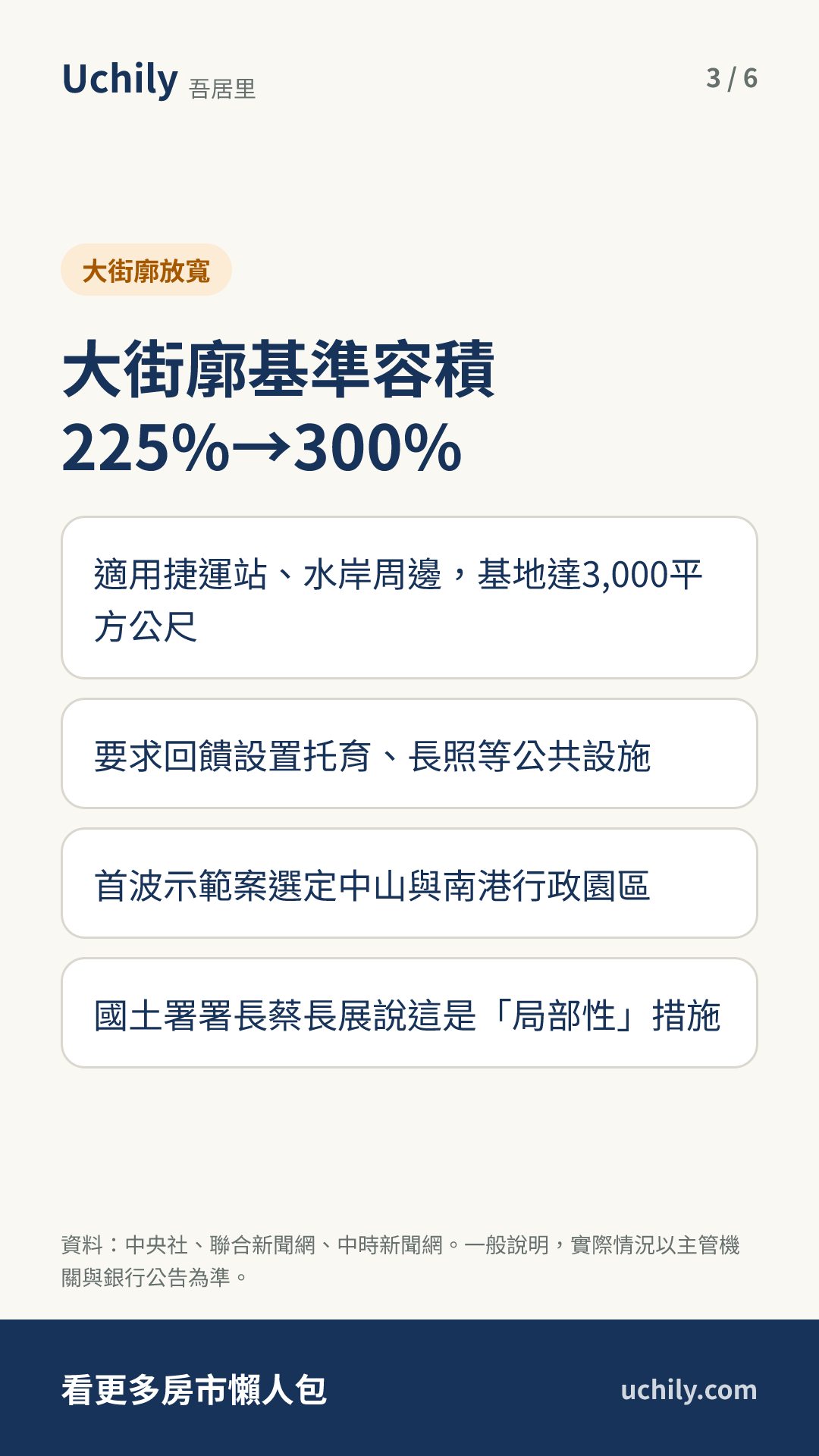
Chiang Wan-an also said that for urban renewal cases involving large-scale blocks, the base floor area ratio will be raised from 225% to 300%. Tsai Chang-chan said this adjustment applies only to sites of 3,000 square meters or more located in specific areas such as MRT stations or waterfronts. He believes most such sites are not self-organized urban renewal cases by ordinary residents; he said the measure is "not a bad thing," but "it is localized," and it is also an incentive for transforming the urban environment.
Tsai Chang-chan said the central government does not oppose Taipei relaxing floor area ratios. He cautioned that some roads in Taipei are not wide, and that if floor area bonuses (including floor area bonuses for marriage and childbearing housing) are layered on top, increases in the area's population and traffic volume could cause regional problems, so the matter still has to be discussed by the local urban planning commission.
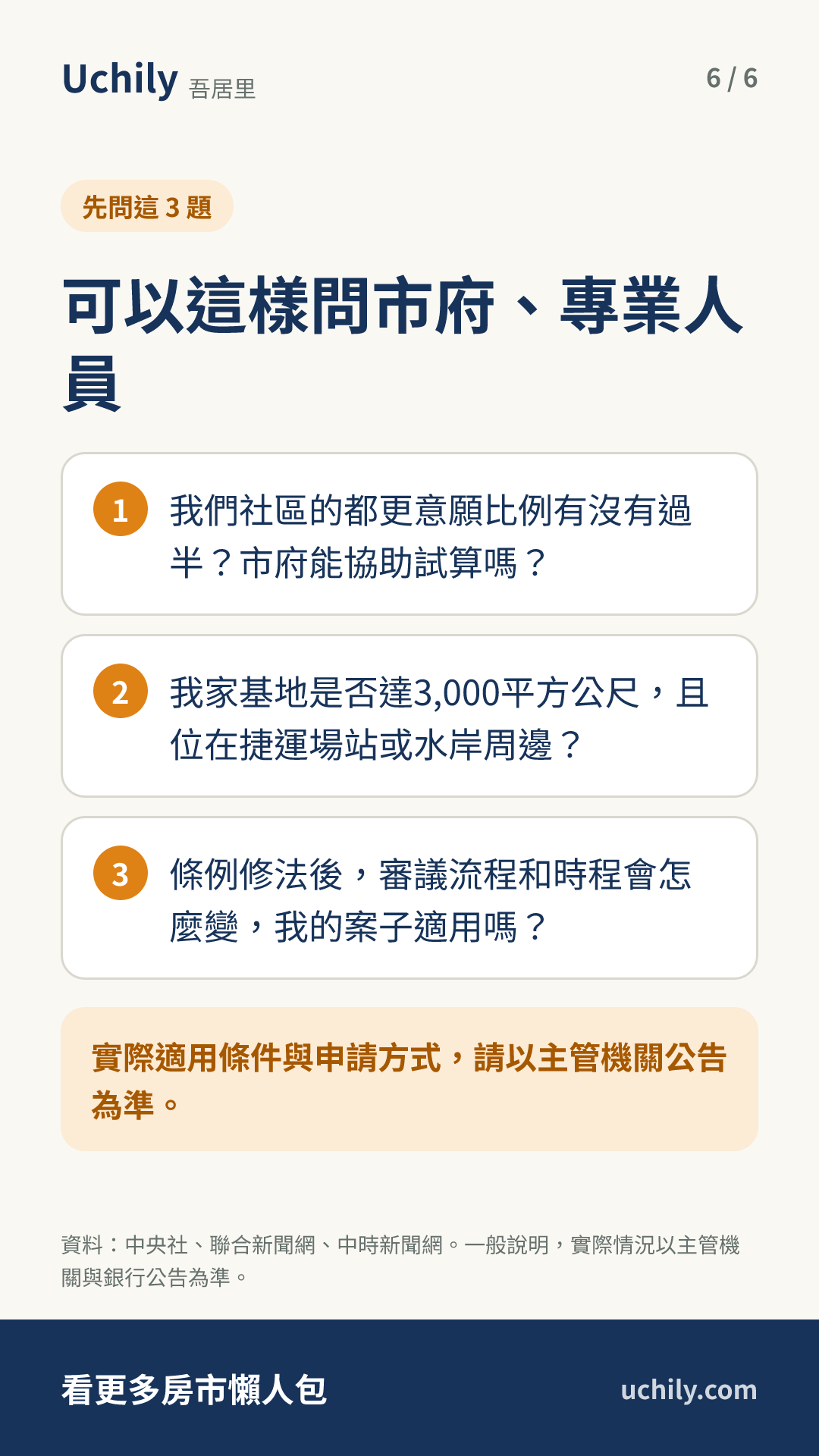
For residents of older buildings who are discussing urban renewal, the threshold dropping to 50% means they can obtain calculation information on finances, legal issues and rights allocation earlier, but after the case enters review, opinions still have to be consolidated before it can move forward. For people whose homes or properties of interest are near MRT stations or waterfronts, it is worth checking whether the site reaches 3,000 square meters, because the floor area ratio increase from 225% to 300% applies only to such sites.
Quick quiz
2 questions; pick an answer to see the explanation
- The consent threshold for the first stage of Taipei's publicly led urban renewal was lowered from 75% to what?
- According to Tsai Chang-chan, head of the Ministry of the Interior's National Land Management Agency, what is the key to shortening urban renewal timelines?
Image cards
6 cards. Tap to enlarge; save and share with friends
Original:聯合新聞網 · We only post summaries and key points. Read the original for the full story.
This week’s news, sorted for you
One Uchily newsletter a week, picking out what actually affects your wallet.
Subscribing creates a Uchily account with this email; open the link in the email to finish. You can unsubscribe from any email.